 ChipApex | Global Electronic Components Supplier
SEARCH
Search Product
Search Post
— IC芯片 | 连接器 | 传感器 | 被动器件 —
Search productSearch post
— IC芯片 | 连接器 | 传感器 | 被动器件 —
Consult the customer manager about the wholesale price.
consultation hotline:86-132-6715-2157
email:[email protected]
Contact the product manager for consultation. One-stop consultation is available.
Do you want a lower wholesale price? Please send us your inquiry and we will reply immediately.
The FCB125N65S3 is an N-channel SuperFET III MOSFET from onsemi, housed in a surface-mount TO-263 (D2PAK) package. It features a drain-source voltage of 650 V and a continuous drain current of 24 A at case temperature. The device exhibits a maximum on-resistance of 105 mΩ at 10 V gate drive. Key electrical parameters include a gate charge of 49 nC, a threshold voltage range of 2.5 V to 4.5 V, and a power dissipation rating of 181 W. It operates within a junction temperature range of -55°C to +150°C.
Verify the specific suffix and package variant against the official datasheet to ensure compatibility with your PCB footprint and thermal requirements. Confirm that the component meets RoHS standards if required by your manufacturing process. Cross-reference the manufacturer part number with authorized distributors to avoid counterfeit components. Ensure proper handling procedures are followed due to the sensitivity of the semiconductor junction.
Select this component when a 650V rated N-channel MOSFET is required in a D2PAK package. The 105 mΩ on-resistance offers a balance between conduction loss and cost for medium-power applications. Consider the 24A current rating relative to your thermal management strategy. Verify that the gate charge characteristics align with your driver capabilities for optimal switching efficiency.
This part belongs to the SUPERFET III family, which employs superjunction technology to achieve superior performance compared to traditional planar MOSFETs. The series is designed for high-efficiency power conversion, offering reduced switching losses and improved thermal stability. It represents an evolution in onsemi's high-voltage discrete power solutions.
Direct substitutes may include FCP125N65S3R0 or FCMT125N65S3, though package differences exist. Verify pinout compatibility and thermal resistance values before substitution. Ensure that any alternative maintains the same voltage and current ratings to prevent circuit failure.
The maximum gate-source voltage is typically ±30 V, as specified in standard datasheets for this voltage class.
Standard documentation does not explicitly certify this specific part number for automotive use under AEC-Q101 standards; verify specific qualification status with the manufacturer.
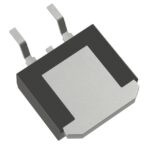 FCB125N65S3
The activity of extra discounts on wholesale prices is in full swing…
Please fill in your contact information and we will send you the latest wholesale price list.





