ChipApex | Global Electronic Components Supplier

SEARCH
Search Product
Search Post
— IC芯片 | 连接器 | 传感器 | 被动器件 —
Search productSearch post
— IC芯片 | 连接器 | 传感器 | 被动器件 —
Consult the customer manager about the wholesale price.
consultation hotline:86-132-6715-2157
email:[email protected]
Contact the product manager for consultation. One-stop consultation is available.
Do you want a lower wholesale price? Please send us your inquiry and we will reply immediately.
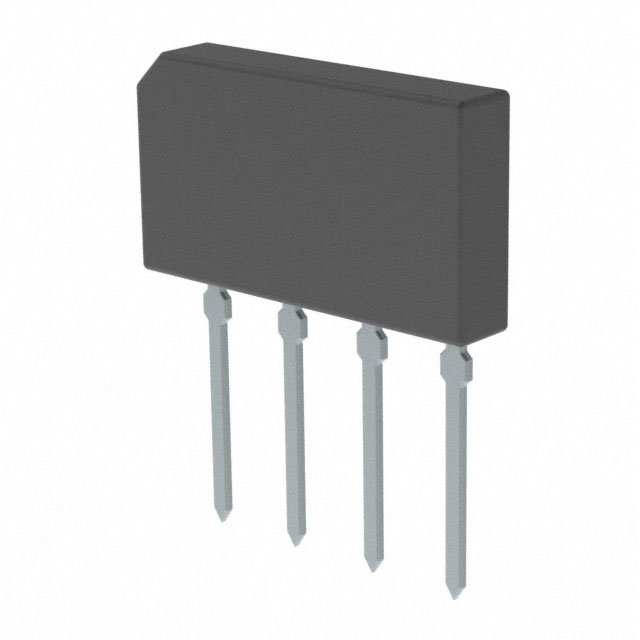
The GeneSiC Semiconductor GBPC1510T is a single-phase glass-passivated silicon bridge rectifier designed for high-temperature applications. It features an average forward rectified current of 15 A and a repetitive peak reverse voltage of 1000 V. The device utilizes the GBPC-T package with an integrally molded heat sink, providing a typical thermal resistance of 1.9 °C/W. Key electrical parameters include a maximum instantaneous forward voltage drop of 1.1 V per leg and a peak forward surge current capability of 300 A. The unit supports an operating temperature range from -55 °C to 150 °C and includes universal 3-way terminals for flexible mounting.
Verify the specific terminal configuration required, as the GBPC-T variant uses nickel-plated faston lugs or copper leads rather than standard PCB pins. Confirm that the application environment remains within the specified -55 °C to 150 °C operating temperature range. Ensure proper torque is applied during bolt-down installation to maintain thermal performance and mechanical integrity without damaging the plastic encapsulation.
Select this component when a 15 A continuous current rating and 1000 V reverse voltage are required in a compact bridge rectifier form factor. The GBPC-T package is suitable for applications needing direct heat-sink mounting with integrated thermal management. Consider the 1.1 V forward voltage drop for efficiency calculations and verify that the 300 A surge current rating meets the circuit's transient requirements.
This part belongs to the GBPC1506T/W through GBPC1510T/W series, which shares identical electrical characteristics except for the reverse voltage rating. The 'T' suffix denotes the use of the GBPC-T package with specific terminal types. This series is designed as a glass-passivated silicon bridge rectifier, offering reliability in high-temperature environments compared to non-passivated alternatives.
Direct replacements must match the 15 A current rating, 1000 V reverse voltage, and GBPC-T package dimensions. Verify terminal compatibility, as the T-package uses distinct faston lugs or copper leads compared to the W-package's wire structure. Ensure the substitute component also offers glass passivation and similar thermal resistance characteristics.
 GBPC1510T

The activity of extra discounts on wholesale prices is in full swing…
Please fill in your contact information and we will send you the latest wholesale price list.