ChipApex | Global Electronic Components Supplier

SEARCH
Search Product
Search Post
— IC芯片 | 连接器 | 传感器 | 被动器件 —
Search productSearch post
— IC芯片 | 连接器 | 传感器 | 被动器件 —
Consult the customer manager about the wholesale price.
consultation hotline:86-132-6715-2157
email:[email protected]
Contact the product manager for consultation. One-stop consultation is available.
Do you want a lower wholesale price? Please send us your inquiry and we will reply immediately.
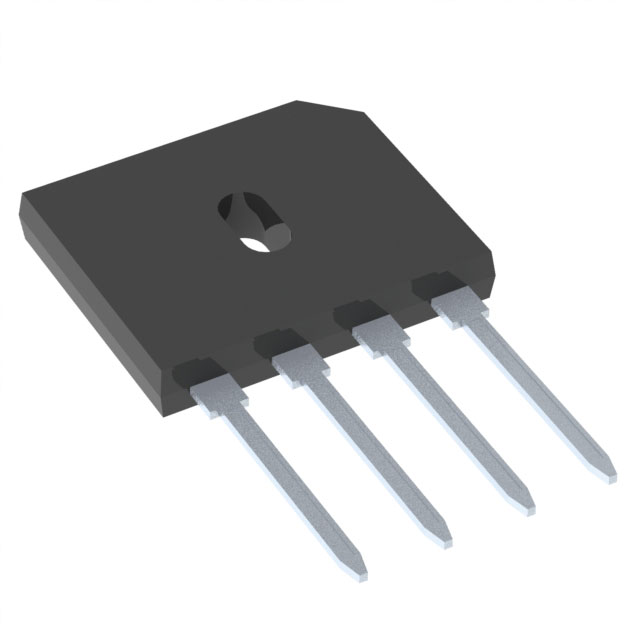
The GBU1002H is a single-phase standard bridge rectifier manufactured by Taiwan Semiconductor Corporation. It features a 100V repetitive peak reverse voltage and supports a maximum average forward current of 10A. The device is housed in a GBU through-hole package with four terminals. Electrical specifications include a typical forward voltage of 1.1V at 10A, a maximum non-repetitive peak forward surge current of 220A, and a junction temperature range from -55°C to +150°C. The 'H' suffix indicates AEC-Q101 qualification.
Verify the component against the official datasheet version M2103 to confirm the specific electrical ratings and physical dimensions. Ensure the ordering code matches the required voltage rating and that the 'H' suffix correctly denotes AEC-Q101 qualification. Check terminal plating compliance with J-STD-002 standards for solderability requirements.
Select this component when a 100V blocking voltage is required for AC-to-DC conversion circuits. The GBU package provides robust mechanical mounting for printed circuit boards. Consider the thermal resistance values for heat dissipation calculations in enclosed environments. Verify that the operating temperature range meets the system's environmental constraints.
This part belongs to the GBU1001–GBU1007 series of standard bridge rectifiers. The series offers various voltage ratings from 50V to 1000V while maintaining a consistent 10A current capacity. The GBU1002H specifically addresses applications requiring 100V reverse voltage tolerance within an automotive-grade qualified package.
Compatible substitutes within the same series include GBU1001H and GBU1003H, provided their respective voltage ratings align with the circuit design requirements. Cross-brand replacements must match the GBU footprint, 10A current rating, and 100V minimum reverse voltage specification.
The 'H' suffix signifies that the device is qualified according to the AEC-Q101 automotive standard.
The maximum non-repetitive peak forward surge current is 220A for an 8.3ms single half sine-wave superimposed on rated load.
The typical junction-to-ambient thermal resistance is 21°C/W.
 GBU1002H

The activity of extra discounts on wholesale prices is in full swing…
Please fill in your contact information and we will send you the latest wholesale price list.