 ChipApex | Global Electronic Components Supplier
SEARCH
Search Product
Search Post
— IC芯片 | 连接器 | 传感器 | 被动器件 —
Search productSearch post
— IC芯片 | 连接器 | 传感器 | 被动器件 —
Consult the customer manager about the wholesale price.
consultation hotline:86-132-6715-2157
email:[email protected]
Contact the product manager for consultation. One-stop consultation is available.
Do you want a lower wholesale price? Please send us your inquiry and we will reply immediately.
The GHXS050B120S-D3 is a Silicon Carbide Schottky Barrier Diode module manufactured by SemiQ. It features a reverse voltage rating of 1200 V and a continuous forward current capacity of 50 A. The device utilizes a SOT-227-4 package with screw mount installation style. Key electrical parameters include a maximum forward voltage of 1.77 V at specified conditions. The operational temperature range spans from -55°C to +175°C, supporting high-temperature applications within the GHXS series.
Verify the specific datasheet version when sourcing, as electrical characteristics may vary between revisions. Confirm that the SOT-227-4 footprint matches the target PCB layout or thermal management solution. Ensure compliance with RoHS standards if required by the end-product specifications. Cross-reference the part number suffix to confirm the exact pinout and packaging configuration before finalizing orders.
Select this component for applications requiring high blocking voltage and elevated operating temperatures. The SiC material offers lower switching losses than silicon alternatives, making it suitable for high-frequency converters. Consider the thermal resistance of the SOT-227 package when designing heat sinks. Evaluate the forward voltage drop against system efficiency targets to ensure optimal power handling capabilities.
This module belongs to the GHXS series of SiC power products from SemiQ. The series is engineered for demanding power electronics applications where reliability and thermal stability are critical. The GHXS050B120S-D3 represents a specific current and voltage rating within this lineup, designed to replace bulkier silicon-based solutions in modern power conversion architectures.
Direct replacements must match the 1200V/50A rating and SOT-227-4 package. Verify thermal interface compatibility and pin assignment equivalence. Substitutes should offer comparable reverse recovery characteristics and junction temperature limits to maintain system performance integrity without redesigning the cooling infrastructure.
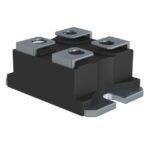 GHXS050B120S-D3
The activity of extra discounts on wholesale prices is in full swing…
Please fill in your contact information and we will send you the latest wholesale price list.





