 ChipApex | Global Electronic Components Supplier

SEARCH
Search Product
Search Post
— IC芯片 | 连接器 | 传感器 | 被动器件 —
Search productSearch post
— IC芯片 | 连接器 | 传感器 | 被动器件 —
Consult the customer manager about the wholesale price.
consultation hotline:86-132-6715-2157
email:[email protected]
Contact the product manager for consultation. One-stop consultation is available.
Do you want a lower wholesale price? Please send us your inquiry and we will reply immediately.
The HDBLS105G is a single-phase bridge rectifier manufactured by Taiwan Semiconductor Corporation, designed for surface-mount applications. It features a DBLS package with four pins and operates within a temperature range of -55°C to +150°C TJ. The device supports a maximum repetitive peak reverse voltage (Vrrm) of 600 V and an average forward rectified current (Io) of 1 A. Key electrical characteristics include a peak forward voltage (Vf) of 1.7 V at 1 A and a reverse leakage current (Ir) of 5 µA at 600 V. It holds AEC-Q101 qualification for automotive standards.
Verify the specific ordering suffix against the manufacturer's official datasheet to confirm packaging type and compliance status. Ensure that any requested variants match the exact part number designation to avoid discrepancies in lead times or material specifications. Cross-reference distributor listings with the original Taiwan Semiconductor documentation to validate authenticity and current production status before finalizing acquisition plans.
Select this component when a compact surface-mount bridge rectifier is required for 600 V applications. The DBLS package offers space savings compared to through-hole alternatives like the DBL series. Consider the AEC-Q101 qualification if the design targets automotive environments. Verify thermal management requirements as the 1 A rating depends on adequate PCB copper area for heat dissipation during continuous operation.
The HDBLS105G belongs to the HDBLS105G series of high-efficiency recovery bridge rectifiers from Taiwan Semiconductor. It shares the same electrical profile as the HDBLS105GH variant but may differ in packaging or specific compliance certifications. This series provides a robust solution for converting AC to DC in low-power applications where board space is limited.
The HDBLS105GH is a related variant within the same family. Verify if the 'H' prefix indicates a specific packaging change or additional qualification requirement. Direct pin-to-pin replacements should be confirmed via official substitution lists to ensure compatibility with existing footprints and thermal constraints.
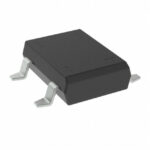 HDBLS105G

The activity of extra discounts on wholesale prices is in full swing…
Please fill in your contact information and we will send you the latest wholesale price list.





