 ChipApex | Global Electronic Components Supplier
SEARCH
Search Product
Search Post
— IC芯片 | 连接器 | 传感器 | 被动器件 —
Search productSearch post
— IC芯片 | 连接器 | 传感器 | 被动器件 —
Consult the customer manager about the wholesale price.
consultation hotline:86-132-6715-2157
email:[email protected]
Contact the product manager for consultation. One-stop consultation is available.
Do you want a lower wholesale price? Please send us your inquiry and we will reply immediately.
The HFA3096BZ is a silicon RF bipolar transistor array manufactured by Renesas Electronics. It integrates five dielectrically isolated transistors on a common monolithic substrate, configured as three NPN and two PNP devices. The NPN transistors offer a transition frequency (fT) of 8 GHz, while the PNP transistors provide an fT of 5.5 GHz. Both types exhibit a typical noise figure of 3.5 dB at 1 GHz. Maximum collector-emitter voltages are rated at 15 V for NPN and 12 V for PNP configurations. The device supports a maximum DC collector current of 65 mA and operates within a temperature range of -55°C to +125°C.
Verify component authenticity through authorized distributors or direct manufacturer channels. Confirm RoHS compliance status and lead-free plating specifications prior to procurement. Ensure proper handling procedures are followed due to moisture sensitivity classification. Validate that the specific ordering suffix matches the required packaging format for integration into the manufacturing process.
Select this component when designing UHF band circuits requiring mixed NPN/PNP configurations with high gain-bandwidth products. Consider the 16-pin SOIC narrow package constraints for PCB layout. Evaluate the 150 mW power dissipation limit against thermal management requirements. Verify that the 65 mA current rating meets the load demands of the intended application without exceeding safe operating area limits.
The HFA3096BZ belongs to the HFA3096 series of ultra-high frequency transistor arrays fabricated using the complementary bipolar UHF-1 process. This series includes variants such as the all-NPN HFA3046 and all-PNP HFA3128. These arrays are engineered for high-frequency performance and reliability, often utilized in military and aerospace contexts where radiation hardness and precise matching are critical.
Direct substitutes include the HFA3046BZ for all-NPN applications and the HFA3127BZ for similar high-frequency needs. Verify pinout compatibility and voltage ratings before substitution. Consult official datasheets for detailed electrical parameter comparisons to ensure functional equivalence in the target circuit.
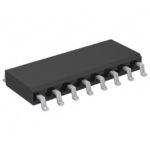 HFA3096BZ
The activity of extra discounts on wholesale prices is in full swing…
Please fill in your contact information and we will send you the latest wholesale price list.





