ChipApex | Global Electronic Components Supplier
SEARCH
Search Product
Search Post
— IC芯片 | 连接器 | 传感器 | 被动器件 —
Search productSearch post
— IC芯片 | 连接器 | 传感器 | 被动器件 —
Consult the customer manager about the wholesale price.
consultation hotline:86-132-6715-2157
email:[email protected]
Contact the product manager for consultation. One-stop consultation is available.
Do you want a lower wholesale price? Please send us your inquiry and we will reply immediately.
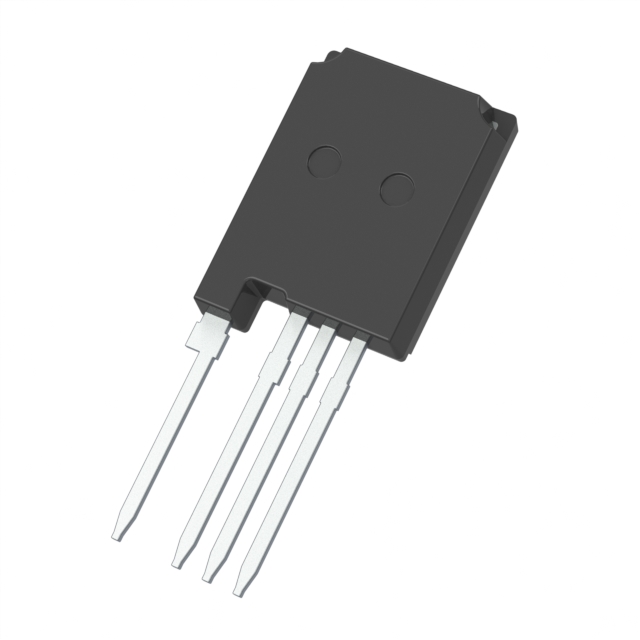
The IKY150N65EH7XKSA1 is a single IGBT with an integrated anti-parallel diode, utilizing Infineon's TRENCHSTOP™ IGBT7 technology. It features a collector-emitter voltage of 650 V and a continuous collector current of 160 A at 25°C. The device operates within a junction temperature range of -40°C to +175°C. Key electrical parameters include a maximum collector-emitter saturation voltage of 1.65 V and a gate charge of 300 nC. The component is housed in a PG-TO247-4-PLUS-NN5.1 package.
Verify the specific ordering suffix against official documentation to confirm exact marking and packaging details. Confirm that the application environment does not exceed the absolute maximum ratings specified in the datasheet. Ensure compliance with JEDEC standards for industrial qualification if required by the design specifications.
Select this component for designs requiring high efficiency in hard-switching environments. The low saturation voltage reduces conduction losses, while optimized switching characteristics minimize dynamic losses. Consider the thermal resistance values when designing the heatsink interface to maintain safe operating temperatures under load.
This part belongs to the TRENCHSTOP™ IGBT7 family from Infineon Technologies. It represents a generation of silicon power devices designed to improve energy efficiency in power conversion systems. The series focuses on reducing switching losses and improving reliability compared to previous generations.
Consult official replacement lists or cross-reference guides provided by Infineon Technologies for verified substitute part numbers. Do not assume pin-compatible alternatives without verifying electrical parameters and thermal characteristics.
No, the product is not qualified according to the AEC Q100 or AEC Q101 documents of the Automotive Electronics Council.
The internal emitter inductance is measured at 13 nH, taken 5 mm from the case.
Infineon Technologies explicitly warns that its products may not be used in any applications where failure could reasonably result in personal injury.
 IKY150N65EH7XKSA1
The activity of extra discounts on wholesale prices is in full swing…
Please fill in your contact information and we will send you the latest wholesale price list.