ChipApex | Global Electronic Components Supplier
SEARCH
Search Product
Search Post
— IC芯片 | 连接器 | 传感器 | 被动器件 —
Search productSearch post
— IC芯片 | 连接器 | 传感器 | 被动器件 —
Consult the customer manager about the wholesale price.
consultation hotline:86-132-6715-2157
email:[email protected]
Contact the product manager for consultation. One-stop consultation is available.
Do you want a lower wholesale price? Please send us your inquiry and we will reply immediately.
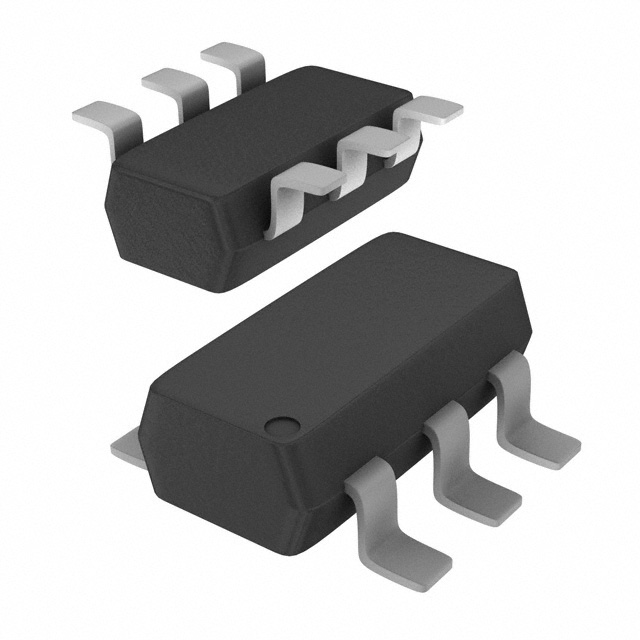
The IMX3T108 is a dual NPN bipolar junction transistor (BJT) array manufactured by ROHM Semiconductor. It is housed in an SOT-457 (SMT6) surface-mount package with six terminals. The device features a collector-emitter voltage (VCEO) of 50 V and a continuous collector current (IC) of 150 mA. Key electrical specifications include a DC current gain (hFE) ranging from 120 to 560 at 1 mA and 6 V, a transition frequency (fT) of 180 MHz, and a power dissipation (Pd) of 300 mW. The maximum operating temperature is +150°C.
Verify the current supply status before design finalization, as this component is classified as Not Recommended for New Designs (NRND). Confirm that existing inventory levels meet project requirements, since future production may be limited. Ensure compatibility with the SOT-457 footprint during PCB layout validation. Check RoHS compliance documentation for specific regulatory needs.
Select this component when a dual NPN configuration is required in a small surface-mount form factor. The 50 V VCEO and 150 mA IC ratings suit low-to-medium power applications. Consider the 180 MHz fT for moderate-speed switching. Evaluate the NRND status against long-term product lifecycle requirements. Compare hFE ranges to ensure sufficient gain margin for the intended circuit topology.
The IMX3T108 belongs to the IMX3 series of complex transistors from ROHM Semiconductor. It serves as a dual NPN alternative to single discrete transistors, reducing board space. Similar parts in the family include the IMX2T108, which shares identical electrical characteristics but may differ in packaging or availability status. This series targets cost-sensitive and space-efficient electronic designs.
The IMX2T108 is listed as a similar specification part with identical electrical parameters. Verify pinout compatibility and package dimensions before substitution. Check if the replacement part maintains the same NRND status or offers improved availability. Ensure thermal and electrical ratings match the original design constraints.
 IMX3T108
The activity of extra discounts on wholesale prices is in full swing…
Please fill in your contact information and we will send you the latest wholesale price list.