 ChipApex | Global Electronic Components Supplier
SEARCH
Search Product
Search Post
— IC芯片 | 连接器 | 传感器 | 被动器件 —
Search productSearch post
— IC芯片 | 连接器 | 传感器 | 被动器件 —
Consult the customer manager about the wholesale price.
consultation hotline:86-132-6715-2157
email:[email protected]
Contact the product manager for consultation. One-stop consultation is available.
Do you want a lower wholesale price? Please send us your inquiry and we will reply immediately.
The INA296A1IDDFR is a bidirectional current sense amplifier from Texas Instruments, housed in an SOT-23-8 package. It features a fixed gain of 10V/V and operates with a supply voltage range of 2.7V to 20V. The device supports a wide common-mode input voltage range from -5V to 110V. Key electrical specifications include a typical bandwidth of 1.1MHz, a slew rate of 8V/µs, and a maximum offset voltage of ±20µV. It draws a quiescent current of 2.5mA and functions within an ambient temperature range of -40°C to +125°C.
Verify the specific suffix IDDFR corresponds to the SOT-23-8 package variant when sourcing. Confirm that the A1 designation matches the required 10V/V gain for your circuit design. Ensure the component meets the -40°C to +125°C operating temperature requirements for your specific environment. Cross-reference the datasheet revision date to ensure compatibility with any recent design updates or errata.
Select this component when high precision and fast response are critical in high-voltage environments. The 10V/V gain is suitable for applications requiring moderate signal amplification with low noise. Consider the SOT-23-8 package constraints for thermal management and PCB space. Evaluate the 1.1MHz bandwidth against your system's switching frequencies to prevent aliasing or instability.
This part belongs to the INA296x family of ultra-precise current sense amplifiers designed for high-side, inline, and low-side sensing. The 'A' version denotes tighter accuracy specifications compared to the 'B' version, specifically regarding offset voltage and gain error. The IDDFR suffix indicates the specific surface-mount packaging and reel configuration provided by the manufacturer.
Direct replacements within the same family include INA296A2IDDFR (20V/V), INA296A3IDDFR (50V/V), INA296A4IDDFR (100V/V), and INA296A5IDDFR (200V/V). These share identical pinouts and functionality but differ in fixed internal gain. Verify that the alternative gain factor aligns with your shunt resistor value and desired output voltage swing.
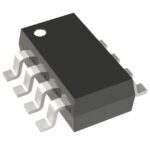 INA296A1IDDFR
The activity of extra discounts on wholesale prices is in full swing…
Please fill in your contact information and we will send you the latest wholesale price list.





