 ChipApex | Global Electronic Components Supplier
SEARCH
Search Product
Search Post
— IC芯片 | 连接器 | 传感器 | 被动器件 —
Search productSearch post
— IC芯片 | 连接器 | 传感器 | 被动器件 —
Consult the customer manager about the wholesale price.
consultation hotline:86-132-6715-2157
email:[email protected]
Contact the product manager for consultation. One-stop consultation is available.
Do you want a lower wholesale price? Please send us your inquiry and we will reply immediately.
The IRG4BC30F is a Generation 4 Insulated Gate Bipolar Transistor manufactured by Infineon Technologies. It features a 600 V collector-emitter breakdown voltage and a continuous collector current of 31 A at 25°C, with a pulsed current capability of 120 A. The device is housed in a surface-mount D2PAK (TO-263-3) package and has a maximum power dissipation of 100 W. Key electrical parameters include a saturation voltage of 1.8 V at 17 A, a gate charge of 51 nC, and switching times of 21 ns turn-on and 200 ns turn-off under specified test conditions.
Verify the specific suffix (STRR or STRL) against the required packaging format, as these denote tape-and-reel configurations. Confirm that the D2PAK footprint matches the target PCB layout. Ensure the operating temperature range aligns with system thermal management capabilities, noting the maximum junction temperature limits defined in the official datasheet.
Select this component for applications requiring robust performance in the 600 V class with moderate current handling. The Generation 4 technology offers improved efficiency over older variants. Consider the thermal resistance of the D2PAK package when designing heatsinking solutions. Evaluate the switching energy losses against the specific PWM frequency requirements of the target inverter topology.
This device belongs to Infineon's G4BC series of ultrafast IGBTs. It is designed to replace earlier generation components like the IRG4BC20F or similar legacy parts where higher current density and faster switching are required. The series is widely used in industrial power conversion equipment due to its reliability and standardized pinout compatibility within the D2PAK form factor.
Direct substitutes may include other Generation 4 IGBTs from the same family with comparable voltage and current ratings, such as the IRG4BC30U, provided the packaging and thermal characteristics are compatible. Cross-reference datasheets for exact switching energy values to ensure equivalent performance in the specific application circuit.
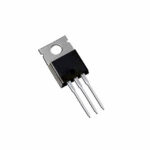 IRG4BC30F
The activity of extra discounts on wholesale prices is in full swing…
Please fill in your contact information and we will send you the latest wholesale price list.





