 ChipApex | Global Electronic Components Supplier

SEARCH
Search Product
Search Post
— IC芯片 | 连接器 | 传感器 | 被动器件 —
Search productSearch post
— IC芯片 | 连接器 | 传感器 | 被动器件 —
Consult the customer manager about the wholesale price.
consultation hotline:86-132-6715-2157
email:[email protected]
Contact the product manager for consultation. One-stop consultation is available.
Do you want a lower wholesale price? Please send us your inquiry and we will reply immediately.
The ISP827BLSMT&R is a dual-channel transistor output optocoupler manufactured by Isocom Components. It features a plastic DIP-8 package and provides 5300 Vrms isolation voltage between input and output circuits. The device operates within a temperature range of -55°C to 100°C. Key electrical parameters include a minimum collector-emitter breakdown voltage of 35 V, a maximum forward current of 50 mA, and a nominal current transfer ratio of 200%. The component is RoHS compliant and UL recognized under File No. E91231.
Verify the specific suffix 'BL' against official Isocom documentation to confirm lead form and material specifications. Ensure the ordering code matches the required tape-and-reel packaging format indicated by 'R'. Cross-reference the UL file number E91231 for compliance requirements in regulated markets. Confirm that the plastic DIP-8 package variant meets thermal and mechanical constraints of the target assembly process.
Select this component when dual-channel isolation is required within a compact footprint. The 5300V isolation rating supports high-voltage applications where safety separation is critical. The transistor output type is suitable for digital switching applications rather than linear amplification. Verify that the 200% CTR range aligns with the drive circuit capabilities and load requirements of the design.
This part belongs to the ISP827 series of high-density phototransistor optocouplers from Isocom Components. The series is designed for applications demanding reliable signal transfer across isolated barriers. The ISP827BLSMT&R specifically denotes the surface-mount or specific lead-form variant within the broader ISP827 family, maintaining the core electrical characteristics of the series while adapting to different mounting technologies.
Direct substitutes may include other dual-channel transistor optocouplers with similar 5300V isolation and DIP-8 packages. Verify pinout compatibility and current transfer ratio ranges before substitution. Check for equivalent UL and VDE approvals if regulatory compliance is mandatory. Consider thermal resistance differences if replacing with components in different package materials.
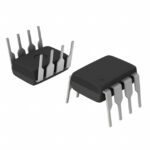 ISP827BLSMT&R

The activity of extra discounts on wholesale prices is in full swing…
Please fill in your contact information and we will send you the latest wholesale price list.





