 ChipApex | Global Electronic Components Supplier

SEARCH
Search Product
Search Post
— IC芯片 | 连接器 | 传感器 | 被动器件 —
Search productSearch post
— IC芯片 | 连接器 | 传感器 | 被动器件 —
Consult the customer manager about the wholesale price.
consultation hotline:86-132-6715-2157
email:[email protected]
Contact the product manager for consultation. One-stop consultation is available.
Do you want a lower wholesale price? Please send us your inquiry and we will reply immediately.
The IXBT20N360HV is a high-voltage N-channel IGBT from the IXYS Polar series, designed for demanding power switching applications. It features a maximum collector-emitter voltage of 3600V and a continuous collector current of 20A at 25°C. The device utilizes silicon technology with a TO-247AD package for through-hole mounting. Key electrical parameters include a typical saturation voltage of 3.8V and a gate-emitter threshold voltage range of 3V to 6V. It operates within a junction temperature range of -55°C to +150°C and offers high blocking voltage capabilities suitable for industrial inverters and motor drives.
Verify the specific suffix designation against the manufacturer's latest datasheet to confirm exact electrical tolerances and packaging variations. Ensure thermal interface materials are compatible with the isolated mounting surface requirements. Cross-reference pinout configurations with existing PCB footprints to prevent installation errors during assembly processes.
Select this component when applications require high voltage isolation exceeding standard 1200V or 1700V limits. Evaluate thermal management needs based on the 3.8V saturation voltage at rated current. Consider the gate drive requirements aligned with the specified threshold voltage range. Confirm that the TO-247AD package fits the mechanical constraints of the target enclosure design.
This device belongs to the IXYS Polar series of high-voltage IGBTs, engineered for efficiency in power conversion. The series emphasizes low on-state voltage drops and fast switching speeds. It represents a evolution in monolithic bipolar MOS transistor technology, offering superior performance compared to discrete solutions in high-voltage industrial environments.
Direct substitutes may include other 3600V IGBTs from IXYS such as the IXBF20N360 if pin compatibility is confirmed. Verify equivalent current ratings and thermal resistance values before substitution. Check for any changes in gate charge characteristics that might affect driver circuit performance.
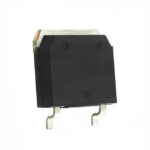 IXBT20N360HV

The activity of extra discounts on wholesale prices is in full swing…
Please fill in your contact information and we will send you the latest wholesale price list.





