 ChipApex | Global Electronic Components Supplier

SEARCH
Search Product
Search Post
— IC芯片 | 连接器 | 传感器 | 被动器件 —
Search productSearch post
— IC芯片 | 连接器 | 传感器 | 被动器件 —
Consult the customer manager about the wholesale price.
consultation hotline:86-132-6715-2157
email:[email protected]
Contact the product manager for consultation. One-stop consultation is available.
Do you want a lower wholesale price? Please send us your inquiry and we will reply immediately.
The IXGA30N120B3-TRL is a single N-channel Insulated Gate Bipolar Transistor (IGBT) from the GenX3 series, manufactured by IXYS. It utilizes silicon technology and is housed in a D2PAK-3 (TO-263-3) surface-mount package. The device supports a maximum collector-emitter voltage of 1.2 kV and a continuous collector current of 60 A at 25°C, with a peak pulsed current rating of 150 A. Key electrical parameters include a collector-emitter saturation voltage of 2.96 V, a gate-emitter leakage current of 100 nA, and a power dissipation capacity of 300 W. It operates within a temperature range of -55°C to +150°C.
Verify the specific suffix against official datasheets, as packaging variations exist between tube and reel formats. Confirm RoHS compliance status through the manufacturer's documentation. Ensure the ordering quantity aligns with the factory pack size requirements specified in the procurement data. Cross-reference the component marking with the official part identification to prevent substitution errors during assembly.
Select this component when a surface-mount IGBT with 1.2 kV rating is required. The TO-263-3 package offers thermal efficiency for moderate power levels up to 300 W. Compare the 2.96 V saturation voltage against alternative packages like TO-247 or TO-268 if lower conduction losses are critical. Consider the 60 A continuous current limit relative to the thermal management capabilities of the target PCB design.
This device belongs to the IXYS GenX3 family of high-speed, low-saturation voltage IGBTs. The family includes various packages such as TO-247 and TO-268, offering flexibility in thermal and mechanical design. The GenX3 technology is characterized by its trench gate structure, which improves switching speed and reduces overall energy loss compared to previous generation planar devices.
Direct replacements may include other IXYS GenX3 devices in different packages, such as the IXGT30N120B3D1 (TO-268) or IXGH30N120B3D1 (TO-247AD), provided pin compatibility and thermal constraints are addressed. Verify that substitute parts maintain similar Vce(sat) and switching characteristics for equivalent circuit performance.
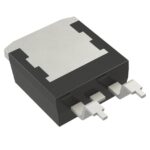 IXGA30N120B3

The activity of extra discounts on wholesale prices is in full swing…
Please fill in your contact information and we will send you the latest wholesale price list.





