 ChipApex | Global Electronic Components Supplier

SEARCH
Search Product
Search Post
— IC芯片 | 连接器 | 传感器 | 被动器件 —
Search productSearch post
— IC芯片 | 连接器 | 传感器 | 被动器件 —
Consult the customer manager about the wholesale price.
consultation hotline:86-132-6715-2157
email:[email protected]
Contact the product manager for consultation. One-stop consultation is available.
Do you want a lower wholesale price? Please send us your inquiry and we will reply immediately.
The IXYS IXGH72N60C3 is a single-chip Insulated Gate Bipolar Transistor (IGBT) belonging to the GenX3 series, designed for high-power switching applications. It features a silicon technology construction housed in a TO-247AD-3 package with screw mount installation style. The device supports a maximum collector-emitter voltage of 600 V and delivers a continuous collector current of 150 A at 25°C. Key electrical parameters include a collector-emitter saturation voltage of 2.3 V and a gate-emitter leakage current of 100 nA. The component operates within a temperature range from -55°C to +150°C, with a maximum gate-emitter voltage limit of 20 V.
Verify the specific suffix C3 against the manufacturer's latest datasheet to confirm pinout compatibility and electrical tolerances. Ensure the supplier provides original packaging documentation to validate authenticity. Cross-reference the part number with official Littelfuse or IXYS distribution channels to avoid counterfeit components. Confirm RoHS compliance status if required by your manufacturing standards before finalizing orders.
Select this component when a 600V IGBT with 150A continuous current capability is required in a TO-247AD-3 package. Compare the 2.3V saturation voltage against alternative devices to ensure optimal conduction losses for your specific load profile. Verify that the switching frequency requirements align with the device's turn-on and turn-off times documented in the official specifications.
This IGBT belongs to the IXGH series, which focuses on high-gain, high-speed switching modules. It is distinct from lower-current variants like the IXGH30N60C3 and higher-power module configurations. The GenX3 platform represents a generation of silicon IGBTs optimized for reduced switching losses while maintaining robust avalanche characteristics.
Direct substitutes may include other GenX3 series parts such as IXGH72N60B3H1 or IXGX72N60A3H1, provided pinouts and electrical ratings match exactly. Always verify package dimensions and thermal resistance values before swapping components in existing PCB layouts.
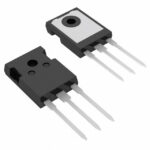 IXGH72N60C3

The activity of extra discounts on wholesale prices is in full swing…
Please fill in your contact information and we will send you the latest wholesale price list.





