 ChipApex | Global Electronic Components Supplier
SEARCH
Search Product
Search Post
— IC芯片 | 连接器 | 传感器 | 被动器件 —
Search productSearch post
— IC芯片 | 连接器 | 传感器 | 被动器件 —
Consult the customer manager about the wholesale price.
consultation hotline:86-132-6715-2157
email:[email protected]
Contact the product manager for consultation. One-stop consultation is available.
Do you want a lower wholesale price? Please send us your inquiry and we will reply immediately.
The IXXX100N60C3H1 is a silicon N-channel Insulated Gate Bipolar Transistor (IGBT) manufactured by IXYS. It utilizes XPT and GenX3 technologies to achieve optimized switching performance. The device features a maximum collector-emitter voltage of 600 V and a continuous collector current of 100 A at 25°C. It is housed in a TO-247-3 package designed for through-hole mounting. Key electrical parameters include a collector-emitter saturation voltage of 1.8 V, a gate-emitter leakage current of 200 nA, and a power dissipation rating of 695 W. The component operates within a temperature range of -55°C to +150°C junction temperature.
Verify the specific suffix H1 against official IXYS documentation to confirm pinout configuration and thermal characteristics. Ensure the ordering part number matches the exact datasheet revision required for your design. Cross-reference the manufacturer's latest product change notifications to identify any recent updates to the component specifications or manufacturing location before finalizing procurement.
Select this component when a 600V blocking capability and 100A continuous current are required in a standard TO-247 footprint. Consider the 1.8V saturation voltage for conduction loss calculations and the 695W power dissipation limit for heatsink sizing. Verify that the switching speed characteristics align with the target application frequency and electromagnetic interference constraints.
This IGBT belongs to the IXYS IXXX series, which combines XPT buffer layer technology with GenX3 trench gate structures. This combination targets applications requiring low conduction losses and fast switching speeds. The series is engineered for industrial power conversion where efficiency and thermal management are critical design factors.
Publicly confirmed substitute part numbers are not available in the provided source material. Consult the official IXYS replacement guide or contact the manufacturer directly for validated cross-reference information regarding equivalent devices.
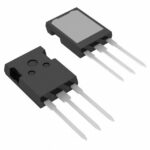 IXXX100N60C3H1
The activity of extra discounts on wholesale prices is in full swing…
Please fill in your contact information and we will send you the latest wholesale price list.





