 ChipApex | Global Electronic Components Supplier
SEARCH
Search Product
Search Post
— IC芯片 | 连接器 | 传感器 | 被动器件 —
Search productSearch post
— IC芯片 | 连接器 | 传感器 | 被动器件 —
Consult the customer manager about the wholesale price.
consultation hotline:86-132-6715-2157
email:[email protected]
Contact the product manager for consultation. One-stop consultation is available.
Do you want a lower wholesale price? Please send us your inquiry and we will reply immediately.
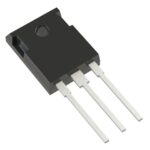
The IXYS IXYH40N120B4 is a single N-channel Insulated Gate Bipolar Transistor (IGBT) belonging to the GenX3™ Plus series. It features a 1200 V collector-emitter voltage rating and a maximum continuous collector current of 136 A at 25°C. The device utilizes a TO-247 (IXTH) through-hole package with three terminals. Key electrical parameters include a collector-emitter saturation voltage of 2.1 V, a power dissipation capacity of 680 W, and a gate-emitter voltage range of ±20 V. It operates within a temperature range of -55°C to +175°C.
Verify the specific ordering suffix against the manufacturer's official datasheet to confirm exact electrical characteristics and packaging options. Ensure that the selected variant matches the required thermal resistance and pin configuration for the target PCB layout. Cross-reference the component marking with the official documentation to prevent substitution errors during assembly.
Select this component for designs requiring a balance of high current handling and moderate switching speeds in a standard through-hole format. The 1200V rating suits medium-voltage systems, while the 136A current capability supports substantial load requirements. Evaluate the thermal impedance of the TO-247 package against the system's heat sink capabilities to ensure operation remains within the specified junction temperature limits under full load conditions.
This device is part of IXYS' discrete IGBT portfolio, specifically leveraging GenX3 Plus technology. It serves as a power switching element distinct from MOSFETs or SiC devices found in other IXYS lines. The TO-247 form factor distinguishes it from surface-mount alternatives like the TO-263 series, positioning it primarily for board-level or chassis-mounted industrial implementations rather than compact consumer electronics.
Direct substitutes include the IXYH40N120C4 and IXYH40N120C3D1. Verify compatibility by comparing the collector-emitter saturation voltage and switching times, as these parameters vary between GenX3 iterations and may impact circuit efficiency.
 IXYH40N120B4
The activity of extra discounts on wholesale prices is in full swing…
Please fill in your contact information and we will send you the latest wholesale price list.





