ChipApex | Global Electronic Components Supplier
SEARCH
Search Product
Search Post
— IC芯片 | 连接器 | 传感器 | 被动器件 —
Search productSearch post
— IC芯片 | 连接器 | 传感器 | 被动器件 —
Consult the customer manager about the wholesale price.
consultation hotline:86-132-6715-2157
email:[email protected]
Contact the product manager for consultation. One-stop consultation is available.
Do you want a lower wholesale price? Please send us your inquiry and we will reply immediately.
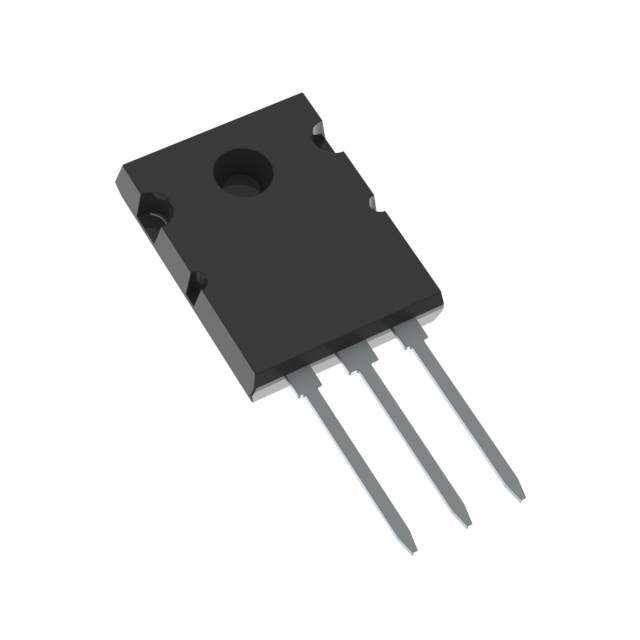
The IXYS IXYK140N120A4 is a GenX4 XPT trench-gate IGBT designed for high-power switching applications. It features a collector-emitter breakdown voltage (VCES) of 1200V and a continuous collector current (IC110) of 140A at 110°C case temperature. The device exhibits an ultra-low saturation voltage (VCE(sat)) of 1.70V maximum at IC110, with a positive thermal coefficient to facilitate parallel operation. Packaged in the standard TO-264 (TO-247AD) format, it supports junction temperatures up to 175°C and offers a power dissipation rating of 1500W at 25°C.
Verify component authenticity by checking manufacturer markings against official datasheet specifications. Confirm RoHS compliance status via the supplier's documentation. Ensure proper handling procedures are followed due to the sensitivity of semiconductor junctions. Validate that the specific batch matches the required electrical parameters before deployment in critical circuits.
Select this component when designing systems requiring high current density and low on-state voltage drop. The 1200V rating suits medium-voltage industrial applications. Consider the 140A continuous current capability relative to thermal management constraints. Evaluate gate drive requirements based on the specified total gate charge values for optimal switching performance.
This device belongs to the IXYS GenX4 product line, which utilizes advanced trench-gate technology to achieve superior performance compared to previous generations. The XPT (Extra-Precision Trench) structure minimizes leakage while maintaining robust avalanche ruggedness. It serves as a key solution for high-efficiency power conversion modules where size and thermal efficiency are paramount.
Direct pin-compatible replacements within the same family include the IXYH55N120A4 or IXYA20N120B4HV, though these offer lower current ratings. For equivalent 140A/1200V performance, verify alternative manufacturers' TO-264 packages. Always compare thermal resistance and switching energy losses before substituting.
 IXYK140N120A4
The activity of extra discounts on wholesale prices is in full swing…
Please fill in your contact information and we will send you the latest wholesale price list.