ChipApex | Global Electronic Components Supplier

SEARCH
Search Product
Search Post
— IC芯片 | 连接器 | 传感器 | 被动器件 —
Search productSearch post
— IC芯片 | 连接器 | 传感器 | 被动器件 —
Consult the customer manager about the wholesale price.
consultation hotline:86-132-6715-2157
email:[email protected]
Contact the product manager for consultation. One-stop consultation is available.
Do you want a lower wholesale price? Please send us your inquiry and we will reply immediately.
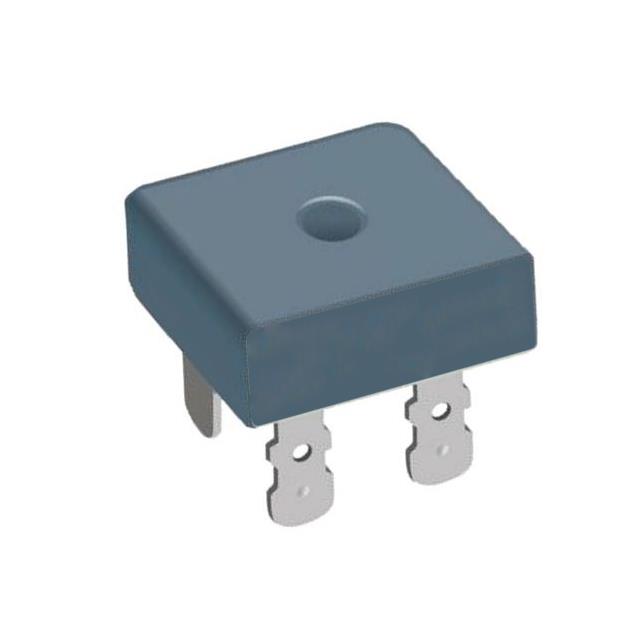
The KBPC3502-G is a single-phase silicon bridge rectifier manufactured by Comchip Technology. It features a maximum average forward rectified current of 35 A and a maximum repetitive peak reverse voltage of 200 V. The device utilizes a GBPC package with screw mount terminals for through-hole installation. Key electrical specifications include a maximum non-repetitive peak forward surge current of 400 A, a maximum DC forward voltage drop of 1.2 V at rated current, and a maximum RMS isolation voltage of 2500 V. The component operates within a junction temperature range of -55 °C to +150 °C.
Verify the specific manufacturer designation when sourcing, as the KBPC3502 part number is utilized by multiple semiconductor vendors including Vishay, onsemi, and Yangjie. Confirm that the suffix "-G" corresponds to Comchip Technology's standard packaging and material specifications. Ensure the procurement documentation explicitly lists the GBPC package type and screw-mount terminal configuration to match the required PCB footprint and mechanical assembly constraints.
Select this component for applications demanding a 35 A continuous current rating with a 200 V reverse voltage withstand capability. The GBPC form factor is suitable for designs requiring high current density and efficient heat dissipation via chassis mounting. Verify that the system's peak reverse voltage does not exceed the 200 V limit under all operating conditions and transient scenarios.
This component belongs to the general-purpose single-phase bridge rectifier category. It is designed for use in environments where reliable AC-to-DC conversion is necessary. The device integrates four silicon diodes in a single encapsulated unit, simplifying circuit layout compared to discrete diode arrangements.
Direct functional substitutes include the KBPC3502 from Vishay and the GBPC3502 from onsemi. These alternatives share identical electrical ratings and the GBPC package outline. Verify pin compatibility and mounting hole dimensions before substitution.
 KBPC3502-G

The activity of extra discounts on wholesale prices is in full swing…
Please fill in your contact information and we will send you the latest wholesale price list.