ChipApex | Global Electronic Components Supplier

SEARCH
Search Product
Search Post
— IC芯片 | 连接器 | 传感器 | 被动器件 —
Search productSearch post
— IC芯片 | 连接器 | 传感器 | 被动器件 —
Consult the customer manager about the wholesale price.
consultation hotline:86-132-6715-2157
email:[email protected]
Contact the product manager for consultation. One-stop consultation is available.
Do you want a lower wholesale price? Please send us your inquiry and we will reply immediately.
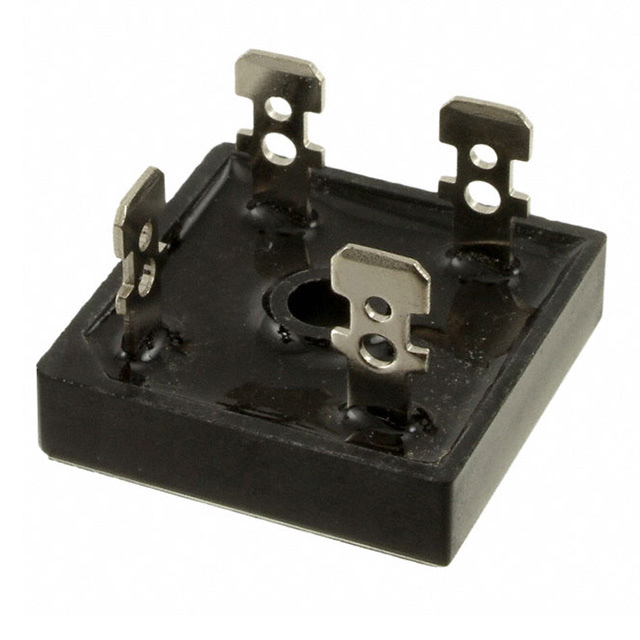
The GeneSiC Semiconductor KBPC5002T is a single-phase silicon bridge rectifier rated for a maximum average forward rectified current of 50 A. It supports repetitive peak reverse voltages up to 400 V, with specific ratings including a 200 V DC blocking voltage and a 140 V RMS reverse voltage. The device features a typical thermal resistance of 2.5 °C/W per leg and operates within a junction temperature range of -55°C to +150°C. Key electrical parameters include a maximum instantaneous forward voltage of 1.1 V at 25 A and a peak forward surge current capability of 400 A.
Verify the exact manufacturer origin, as GeneSiC branding may appear on components sourced through various distributors or rebranded by third parties. Confirm the suffix 'T' corresponds to the specific KBPC-T package variant detailed in the datasheet. Ensure the component matches the 50 A and 200 V specifications required for your circuit design before finalizing orders.
Select this component when a 50 A continuous current rating and 200 V reverse voltage are required. The 2.5 °C/W thermal resistance indicates suitability for applications where effective heat sinking is implemented. Consider the 400 A surge capability for inrush current protection. Verify that the mounting hole configuration aligns with the #10 screw requirement specified in the mechanical data.
This component belongs to the KBPC5000 series, which includes variants ranging from 50 V to 400 V reverse voltage ratings. All members of this family share the same 50 A current rating and similar thermal characteristics, differing primarily in their peak reverse voltage capabilities. The KBPC5002T specifically addresses mid-range voltage requirements within this high-current bridge rectifier lineup.
Direct replacements must match the 50 A current rating, 200 V minimum reverse voltage, and KBPC-T package dimensions. Verify that substitute parts offer equivalent thermal resistance and surge current ratings to maintain system reliability without redesigning the cooling infrastructure.
 KBPC5002T

The activity of extra discounts on wholesale prices is in full swing…
Please fill in your contact information and we will send you the latest wholesale price list.