ChipApex | Global Electronic Components Supplier
SEARCH
Search Product
Search Post
— IC芯片 | 连接器 | 传感器 | 被动器件 —
Search productSearch post
— IC芯片 | 连接器 | 传感器 | 被动器件 —
Consult the customer manager about the wholesale price.
consultation hotline:86-132-6715-2157
email:[email protected]
Contact the product manager for consultation. One-stop consultation is available.
Do you want a lower wholesale price? Please send us your inquiry and we will reply immediately.
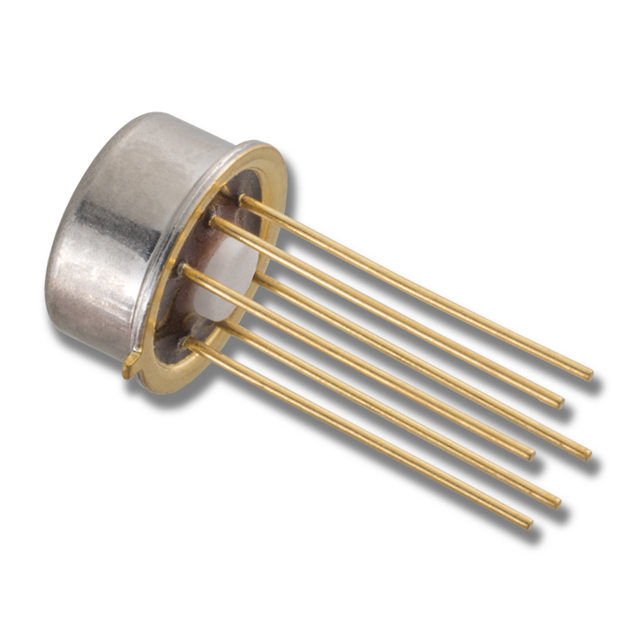
The LS844 TO-78 6L ROHS is a low-noise, monolithic dual N-channel JFET amplifier manufactured by Linear Integrated Systems. It features ultra-low input capacitance and noise characteristics suitable for precision instrumentation. Key electrical parameters include a typical voltage noise of 2.5nV/√Hz at 1kHz, maximum gate leakage current of 15pA, and maximum offset voltage drift of 10µV/ºC over the temperature range. The device offers high common-mode rejection ratio (CMRR) up to 100dB and operates within a junction temperature range of -55°C to +150°C.
Verify that the specific part number matches the required package style and RoHS compliance status. Confirm that the ordering suffix aligns with the manufacturer's standard call-out list. Ensure compatibility with the intended operating temperature range and verify absolute maximum ratings against the application's voltage and current constraints before finalizing procurement.
Select this component when minimizing input capacitance is critical to reducing intermodulation distortion compared to similar devices like the LSK389. Consider the TO-78 metal can package for applications requiring robust through-hole mounting or specific thermal management. Evaluate the trade-off between slightly higher noise levels versus significantly lower capacitance to determine if it meets the system's sensitivity requirements.
The LS844 Series represents an advancement in dual N-channel JFET technology by combining low noise with exceptionally low gate-to-drain capacitance. Unlike previous generations, it utilizes interleaved silicon construction for superior matching. This series serves as a direct replacement for legacy parts in high-performance analog circuits where low capacitance is more vital than marginal noise improvements.
The LS844 TO-78 6L is fit, form, and pin compatible with the LSK389 product in equivalent packages. Designers should account for the difference in gate-to-drain capacitance, which is significantly lower in the LS844, potentially allowing for simpler circuit topologies.
 LS844 TO-78 6L ROHS
The activity of extra discounts on wholesale prices is in full swing…
Please fill in your contact information and we will send you the latest wholesale price list.