ChipApex | Global Electronic Components Supplier
SEARCH
Search Product
Search Post
— IC芯片 | 连接器 | 传感器 | 被动器件 —
Search productSearch post
— IC芯片 | 连接器 | 传感器 | 被动器件 —
Consult the customer manager about the wholesale price.
consultation hotline:86-132-6715-2157
email:[email protected]
Contact the product manager for consultation. One-stop consultation is available.
Do you want a lower wholesale price? Please send us your inquiry and we will reply immediately.
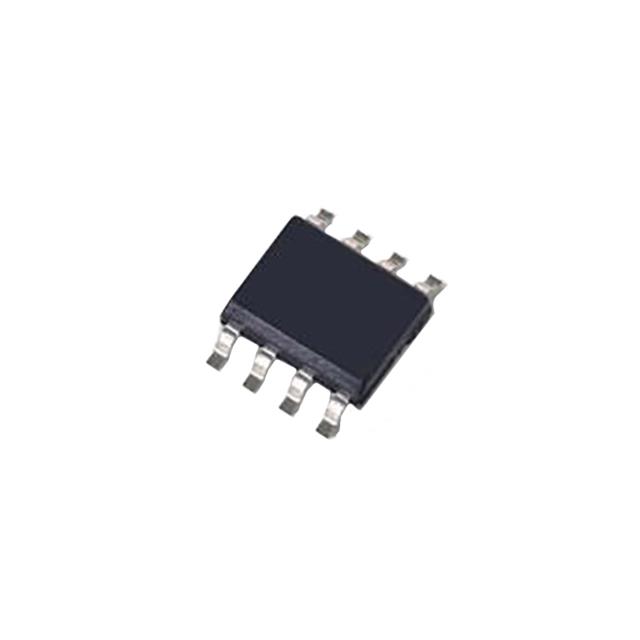
The LSK489A is a monolithic dual N-Channel JFET amplifier featuring industry-low input capacitance and low noise. It offers an input capacitance of 4pF and a noise voltage of 1.8nV/√Hz at 1kHz. The device provides high CMRR of 102dB and tight differential matching with ΔIDSS of 6mA for Grade A. Gate-to-source breakdown voltage is rated at 60V, while gate-to-gate breakdown reaches ±45V. Transconductance typically measures 1500µS. Operating temperatures range from -55°C to +150°C junction temperature.
Verify the specific grade designation (A or B) required for your design, as IDSS ranges differ between grades. Confirm package availability matches the SOIC 8L requirement. Ensure supply chain sources provide original manufacturer documentation to validate component authenticity and revision status before integration into production systems.
Select this component when minimizing input capacitance is critical for reducing intermodulation distortion in high-frequency circuits. Choose the LSK489A over the LSK389 if lower capacitance outweighs the marginal increase in noise voltage. Verify that the required IDSS matching tolerance aligns with the specified Grade A limits for optimal circuit performance.
This device belongs to the LSK489 series of low-noise, low-capacitance dual JFETs manufactured by Linear Integrated Systems. It serves as a surface-mount alternative to through-hole variants, offering pin compatibility with the LSK389 family in SOIC packages. The technology targets precision instrumentation where signal integrity and minimal parasitic effects are paramount.
The LSK489 SOIC 8L package is fit, form, and pin compatible with the LSK389 product. Designers may substitute the LSK389 directly without schematic changes. For single-channel requirements, the LSK189 serves as the equivalent single N-Channel version within the same product family.
The LSK489 features a much lower gate-to-drain capacitance of 4pF compared to the 25pF found in the LSK389, enabling simpler circuit designs with reduced intermodulation distortion.
The primary difference lies in the drain saturation current matching. The LSK489A has a tighter ΔIDSS limit of 6mA, whereas the LSK489B allows a ΔIDSS of 7mA.
Yes, the datasheet explicitly lists sonobuoys, hydrophones, and acoustic sensors as target applications due to the device's low noise profile and tight matching characteristics.
 LSK489A SOIC 8L ROHS
The activity of extra discounts on wholesale prices is in full swing…
Please fill in your contact information and we will send you the latest wholesale price list.