 ChipApex | Global Electronic Components Supplier

SEARCH
Search Product
Search Post
— IC芯片 | 连接器 | 传感器 | 被动器件 —
Search productSearch post
— IC芯片 | 连接器 | 传感器 | 被动器件 —
Consult the customer manager about the wholesale price.
consultation hotline:86-132-6715-2157
email:[email protected]
Contact the product manager for consultation. One-stop consultation is available.
Do you want a lower wholesale price? Please send us your inquiry and we will reply immediately.
M4A3-512/192-12FAI is listed in the Complex Programmable Logic Devices range at ChipApex. The manufacturer field lists Lattice Semiconductor Corporation. Its product description is IC CPLD 512MC 12NS 256FPBGA. Review the specifications below when checking this part for your BOM.
The M4A3-512/192-12FAI is a high-performance Complex Programmable Logic Device (CPLD) from the Lattice ispMACH 4A family. It features 512 macrocells and supports up to 192 user I/Os within a 388-pin chip-array BGA (caBGA) package. The device operates at a maximum frequency of 125 MHz with a typical propagation delay of 7.5 ns. It utilizes E2CMOS technology for in-system programming via JTAG, ensuring 100% pin-out retention and first-time-fit capability across commercial temperature ranges.
Verify component authenticity through authorized distributors or direct manufacturer channels. Confirm that the caBGA package matches the specific footprint requirements of the target PCB design. Ensure compliance with relevant environmental standards if applicable to the end-use environment.
Select this model when designs require high I/O counts and predictable timing characteristics. The 192 I/O configuration fits the 388-pin caBGA package. Consider the 7.5 ns speed grade for applications needing 125 MHz operation. Verify power supply compatibility with the 3.3-V core voltage.
This component belongs to the ispMACH 4A family, which offers flexible architectures ranging from 32 to 512 macrocells. The M4A3-512 variant represents the highest density option in the 3.3-V series, providing extensive logic resources for complex digital designs while maintaining small form factor advantages over discrete logic solutions.
Direct replacements within the same family include other M4A3-512 variants with different speed grades or package options. Cross-family migration may require architectural adjustments due to differences in macrocell structures and I/O capabilities.
Explore related parts through Embedded, Integrated Circuits (ICs), all product categories, ChipApex homepage.
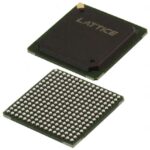 M4A3-512/192-12FAI

The activity of extra discounts on wholesale prices is in full swing…
Please fill in your contact information and we will send you the latest wholesale price list.





