ChipApex | Global Electronic Components Supplier
SEARCH
Search Product
Search Post
— IC芯片 | 连接器 | 传感器 | 被动器件 —
Search productSearch post
— IC芯片 | 连接器 | 传感器 | 被动器件 —
Consult the customer manager about the wholesale price.
consultation hotline:86-132-6715-2157
email:[email protected]
Contact the product manager for consultation. One-stop consultation is available.
Do you want a lower wholesale price? Please send us your inquiry and we will reply immediately.
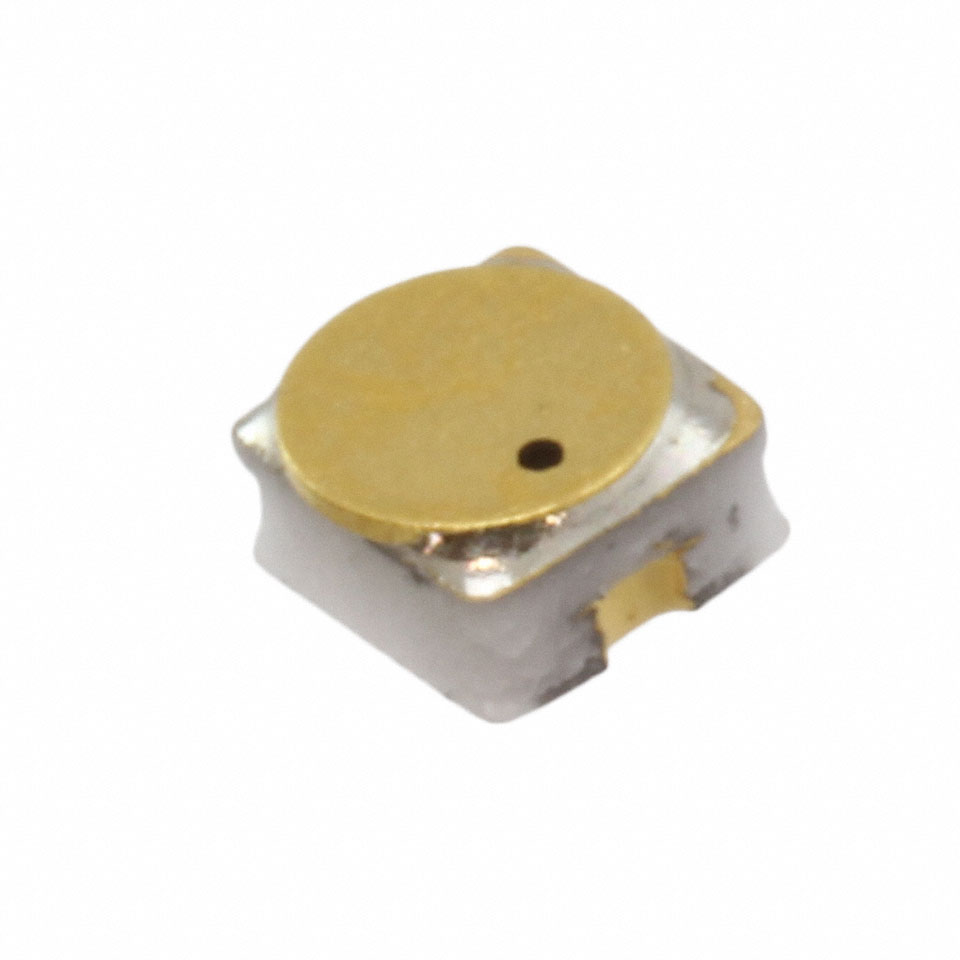
The MA46H202-1056 is a surface mount gallium arsenide tuning varactor diode featuring a hyperabrupt junction with a constant gamma of 1.25. It operates within a reverse voltage range of 2 to 20 volts and provides a total capacitance of 3.3 pF at 0 V bias, decreasing to 2.7 pF at 4 V bias. The device exhibits a minimum quality factor of 2000 at 4 V reverse bias and achieves a capacitance ratio of 5.6. Electrical specifications include a breakdown voltage of 22 V minimum and a maximum reverse current of 100 nA at 16 V. The component is housed in the hermetic ODS-1056 ceramic package.
Verify the specific ordering suffix to confirm the case style, as the MA46H202 series is available in multiple packages including ODS-1056 and ODS-1088. Ensure that the procurement documentation explicitly references the datasheet revision V8 or later to guarantee alignment with the stated electrical parameters. Confirm that the delivered components match the required hermetic sealing standards if operating in environments necessitating JANTX screening.
Select this component when designing circuits that require a constant gamma of 1.25 over a 2 to 20 volt bias range. The MA46H202-1056 is appropriate for applications prioritizing a high capacitance ratio alongside a high quality factor. Consider the package parasitic capacitance of approximately 0.15 pF and inductance of 0.45 nH during layout. Verify that the system's maximum operating temperature remains within the -65°C to +150°C range specified for the ODS-1056 case style.
This part belongs to the MACOM MA46H200 through MA46H204 family of GaAs tuning varactors. These devices are characterized by hyperabrupt junctions with a constant gamma of 1.25. This family offers the largest capacitance ratio among the standard GaAs varactor families while maintaining a high quality factor, distinguishing it from the 0.75 gamma and 1.5 gamma variants.
Direct replacements within the same family include MA46H200-1056, MA46H201-1056, MA46H203-1056, and MA46H204-1056. Substituting these parts requires verifying that the resulting total capacitance and capacitance ratio meet the circuit requirements, as values vary across the series.
 MA46H202-1056
The activity of extra discounts on wholesale prices is in full swing…
Please fill in your contact information and we will send you the latest wholesale price list.