 ChipApex | Global Electronic Components Supplier

SEARCH
Search Product
Search Post
— IC芯片 | 连接器 | 传感器 | 被动器件 —
Search productSearch post
— IC芯片 | 连接器 | 传感器 | 被动器件 —
Consult the customer manager about the wholesale price.
consultation hotline:86-132-6715-2157
email:[email protected]
Contact the product manager for consultation. One-stop consultation is available.
Do you want a lower wholesale price? Please send us your inquiry and we will reply immediately.
The MPC9230EIR2 is a low voltage PECL clock synthesizer manufactured by Integrated Device Technology (IDT), now part of Renesas Electronics. It generates synthesized clock signals from 50 MHz to 800 MHz using an internal PLL with a VCO range of 800–1600 MHz. The device features differential LVPECL outputs, an on-chip crystal oscillator, and supports both serial and parallel programming interfaces. It operates on a single 3.3 V supply with separate analog and digital power domains to minimize jitter. The component is housed in a 28-lead PLCC package and functions within an ambient temperature range of -40°C to +85°C.
Verify that the ordering suffix 'EI' corresponds to the 28-lead PLCC Pb-free package as specified in the datasheet. Confirm the manufacturer origin, noting the device was originally produced by IDT before acquisition by Renesas. Ensure the specific revision level matches system requirements, as AC characteristics may vary slightly between revisions.
Select this component when a 3.3 V compatible LVPECL clock source up to 800 MHz is required. The MPC9230 is pin-compatible with the MC12430, allowing for direct replacement in existing designs. Consider the thermal resistance values if operating at maximum frequencies, as higher VCO speeds increase power dissipation within the 28-lead PLCC package.
The MPC9230 belongs to the family of high-frequency clock synthesizers designed for mid-to-high performance applications. It utilizes SiGe technology to achieve sub-nanosecond edge rates and minimal frequency overshoot. The device integrates a fully functional PLL, eliminating the need for external loop filters and reducing overall system complexity and board space.
The MPC9230 is functionally and pin-compatible with the MC12430. Designers replacing legacy components should verify that the target application supports the 3.3 V logic levels and LVPECL output standards defined in the MPC9230 specifications.
A fundamental AT-cut series resonant crystal is recommended. Parallel resonant crystals can be used but may result in a frequency error of a few hundred ppm.
Active signals on the TEST output can detrimentally affect the jitter of the PECL output pair. For optimal jitter specifications, the TEST output should remain static during normal operation.
The VCC_PLL pin requires filtering to isolate the sensitive analog PLL circuitry from digital switching noise. A resistor-capacitor filter targeting the 1 kHz to 1 MHz range is recommended to maintain signal integrity.
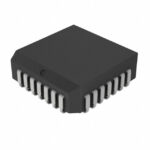 MPC9230EIR2

The activity of extra discounts on wholesale prices is in full swing…
Please fill in your contact information and we will send you the latest wholesale price list.





