ChipApex | Global Electronic Components Supplier
SEARCH
Search Product
Search Post
— IC芯片 | 连接器 | 传感器 | 被动器件 —
Search productSearch post
— IC芯片 | 连接器 | 传感器 | 被动器件 —
Consult the customer manager about the wholesale price.
consultation hotline:86-132-6715-2157
email:[email protected]
Contact the product manager for consultation. One-stop consultation is available.
Do you want a lower wholesale price? Please send us your inquiry and we will reply immediately.
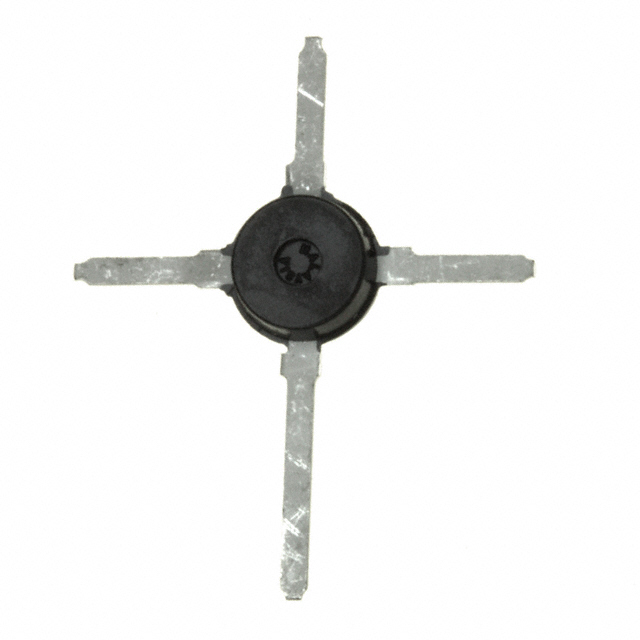
The MRF553T is an NPN silicon RF discrete low power transistor designed for wideband large signal stages in the VHF frequency range. It operates with a collector-emitter voltage of 16 Vdc and delivers 1.5 W output power at 175 MHz. The device provides a minimum gain of 11.5 dB and typical efficiency of 60% when specified at 12.5 V. It utilizes a Power Macro package with electroless tin-plated leads to enhance solderability. Total device dissipation reaches 3.0 Watts at a case temperature of 75°C, with a derating factor of 40 mW/°C above that threshold.
Verify the specific manufacturer source, as the MRF553 designation appears across multiple vendors including Advanced Power Technology and Microsemi Corporation. Confirm the exact datasheet revision and RoHS compliance status corresponding to the 'G' suffix if applicable. Ensure the Power Macro package dimensions match the target PCB footprint requirements before finalizing procurement orders.
Select this component for VHF band designs requiring moderate power output around 1.5 W. The device offers high linearity and stability under load mismatch conditions. Consider the thermal management capabilities provided by the Power Macro package for heat dissipation. Verify that the operating frequency aligns with the 140-175 MHz broadband circuit specifications outlined in the functional test data.
The MRF553 series belongs to a family of NPN silicon RF transistors optimized for low power applications. Variants such as the MRF559 and MRF557 share similar packaging or performance characteristics but differ in frequency ranges and power handling capabilities. The MRF553T specifically denotes the tape and reel packaging format for automated assembly processes.
The MRF559 serves as a related alternative within the same product family offering different power levels. The MRF557 provides comparable performance metrics with slight variations in current handling. Evaluate these options based on specific gain and efficiency requirements while maintaining compatibility with the existing Power Macro package constraints.
 MRF553T
The activity of extra discounts on wholesale prices is in full swing…
Please fill in your contact information and we will send you the latest wholesale price list.