 ChipApex | Global Electronic Components Supplier
SEARCH
Search Product
Search Post
— IC芯片 | 连接器 | 传感器 | 被动器件 —
Search productSearch post
— IC芯片 | 连接器 | 传感器 | 被动器件 —
Consult the customer manager about the wholesale price.
consultation hotline:86-132-6715-2157
email:[email protected]
Contact the product manager for consultation. One-stop consultation is available.
Do you want a lower wholesale price? Please send us your inquiry and we will reply immediately.
The MSC2X30SDA170J is a dual Silicon Carbide Schottky Barrier Diode (SBD) manufactured by Microchip Technology. It features two anti-parallel diodes housed in an isolated SOT-227 package. The device supports a maximum DC reverse voltage of 1700 V and a maximum DC forward current of 30 A at 100 °C. Static characteristics include a typical forward voltage of 1.5 V at 30 A and 25 °C, with a maximum reverse leakage current of 200 μA at 1700 V. Thermal performance specifies a junction-to-case thermal resistance of 0.45 °C/W typical.
Verify the specific ordering suffix against official Microchip documentation to confirm pin configuration and internal topology. Confirm RoHS compliance status and packaging details directly with the manufacturer or authorized distributors prior to procurement. Ensure application requirements align with the absolute maximum ratings provided in the datasheet.
Select this component for high-voltage applications requiring low switching losses and high thermal efficiency. The isolated SOT-227 package facilitates direct mounting to heatsinks, reducing system complexity. Evaluate thermal management needs based on the specified junction-to-case thermal resistance and operating temperature range up to 175 °C.
This device belongs to the Microsemi silicon carbide power Schottky barrier diode product line, now part of Microchip Technology. The series offers performance improvements over traditional silicon diodes while lowering total cost of ownership for high-voltage systems. The dual configuration allows for versatile circuit topologies within a single compact package.
The MSC2X31SDA170J serves as a functional substitute within the same datasheet family, differing only in internal parallel versus anti-parallel diode configuration. Verify that the replacement matches the required circuit topology before implementation.
The device provides an isolated voltage rating of 2500 V RMS from terminals to the mounting base for a sinusoidal waveform at 50 Hz–60 Hz for one minute.
No, the device is characterized by having no reverse recovery charge, which contributes to its suitability for high-frequency operation.
The maximum operating junction temperature is 175 °C.
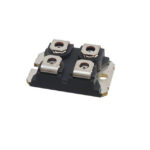 MSC2X30SDA170J
The activity of extra discounts on wholesale prices is in full swing…
Please fill in your contact information and we will send you the latest wholesale price list.





