ChipApex | Global Electronic Components Supplier
SEARCH
Search Product
Search Post
— IC芯片 | 连接器 | 传感器 | 被动器件 —
Search productSearch post
— IC芯片 | 连接器 | 传感器 | 被动器件 —
Consult the customer manager about the wholesale price.
consultation hotline:86-132-6715-2157
email:[email protected]
Contact the product manager for consultation. One-stop consultation is available.
Do you want a lower wholesale price? Please send us your inquiry and we will reply immediately.
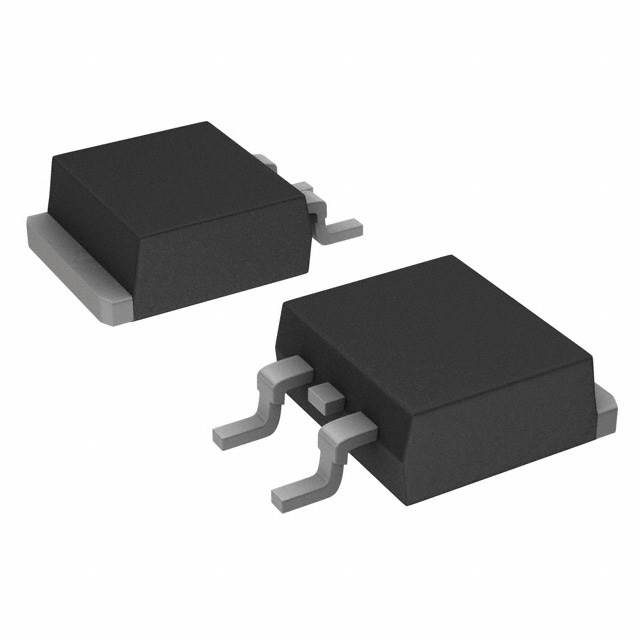
The MURB1620CTR is an ultrafast recovery rectifier manufactured by onsemi, featuring a dual common anode configuration housed in a D2PAK-3 (TO-263-3) surface-mount package. It supports a maximum repetitive peak reverse voltage of 200 V and provides an average forward current of 8 A per leg, totaling 16 A per package. The device exhibits an ultrafast reverse recovery time of 35 ns with a typical forward voltage drop of 975 mV at rated current. It operates within a junction temperature range of -65 °C to +175 °C and includes high-temperature glass passivated junctions for reliability.
Verify the specific suffix against official datasheets, as variations such as TRT4G or T4G indicate different packaging formats like tape and reel or cut tape. Confirm RoHS compliance status and REACH SVHC declarations directly from the manufacturer's documentation before procurement. Ensure the ordering part number matches the required polarity and package type to avoid functional mismatches in assembly.
Select this component for designs requiring fast recovery speeds and low leakage currents in compact surface-mount layouts. The dual common anode structure simplifies circuit topology compared to discrete diode arrangements. Evaluate thermal management requirements carefully, as current derating is necessary at elevated case and ambient temperatures to maintain performance within safe operating limits.
This device belongs to the MURB series of ultrafast rectifiers designed for SwitchMode power applications. It serves as the complementary common anode counterpart to the MUR1620CT and MURB1620CT common cathode devices. The series is engineered to meet stringent efficiency and speed requirements in modern power conversion systems, offering robust performance in automotive and industrial environments.
The MUR1620CTRG and MURB1620CTRG are documented related parts within the same product family. Verify pinout compatibility and electrical parameter alignment before substitution. Note that suffixes may denote specific packaging or automotive qualification standards rather than functional changes.
 MURB1620CTR
The activity of extra discounts on wholesale prices is in full swing…
Please fill in your contact information and we will send you the latest wholesale price list.