 ChipApex | Global Electronic Components Supplier
SEARCH
Search Product
Search Post
— IC芯片 | 连接器 | 传感器 | 被动器件 —
Search productSearch post
— IC芯片 | 连接器 | 传感器 | 被动器件 —
Consult the customer manager about the wholesale price.
consultation hotline:86-132-6715-2157
email:[email protected]
Contact the product manager for consultation. One-stop consultation is available.
Do you want a lower wholesale price? Please send us your inquiry and we will reply immediately.
The MURD620CTT4G is a SwitchMode Power Rectifier featuring a common cathode dual diode configuration. It provides an average rectified current of 6.0 Amperes and a maximum repetitive reverse voltage of 200 Volts. The device exhibits an ultrafast reverse recovery time of 35 nanoseconds with soft recovery characteristics to minimize switching noise. It operates within a junction temperature range of -65°C to 175°C and is housed in a D2PAK surface-mount package.
Verify the specific revision level of the datasheet, as ON Semiconductor has issued multiple updates (Rev. 5 through Rev. 15) for this part number over time. Confirm that the ordering suffix matches the required tape and reel quantity and packaging specifications. Ensure compliance with RoHS and lead-free requirements if applicable to the assembly process. Cross-reference the manufacturer's official documentation for any changes in mechanical dimensions or marking codes.
Select this component for designs requiring fast recovery times below 40 nanoseconds and moderate current handling up to 6 Amperes. The common cathode arrangement simplifies layout compared to discrete single diodes. Consider the thermal performance of the D2PAK package and ensure adequate heatsinking or PCB copper area to manage power dissipation at elevated ambient temperatures. Verify compatibility with the target switching frequency to leverage the soft recovery benefits.
This device belongs to the MUR series of SwitchMode Power Rectifiers from ON Semiconductor. It is functionally related to other ultrafast diodes such as the MURB1660CTT4G and MURD320T4G, though these differ in voltage ratings and current capacities. The MURD620CTT4G specifically targets applications needing a balance between speed and current rating in compact surface-mount form factors.
Public confirmed substitute part numbers include MURD620CTR and MURD620CTRG. These variants share identical electrical specifications and pinout configurations. Verify that the replacement variant meets the same environmental and packaging requirements as the original design specification.
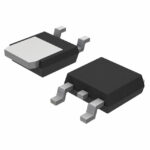 MURD620CTT4G
The activity of extra discounts on wholesale prices is in full swing…
Please fill in your contact information and we will send you the latest wholesale price list.





