ChipApex | Global Electronic Components Supplier
SEARCH
Search Product
Search Post
— IC芯片 | 连接器 | 传感器 | 被动器件 —
Search productSearch post
— IC芯片 | 连接器 | 传感器 | 被动器件 —
Consult the customer manager about the wholesale price.
consultation hotline:86-132-6715-2157
email:[email protected]
Contact the product manager for consultation. One-stop consultation is available.
Do you want a lower wholesale price? Please send us your inquiry and we will reply immediately.
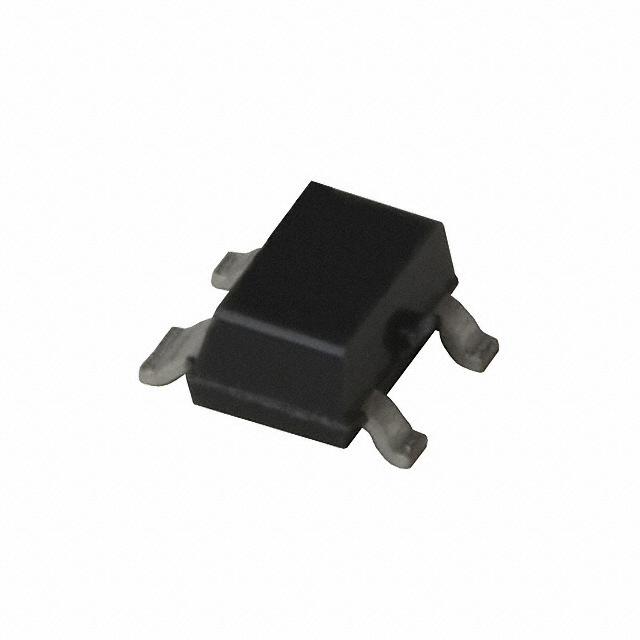
The NE68018-T1-A is a GaAs MMIC monolithic microwave amplifier manufactured by CEL (Comlinear). It operates within the frequency range of 18.0 to 26.5 GHz, covering the K and Ka bands. The device integrates an on-chip DC blocking capacitor for simplified biasing. It is housed in a compact surface-mount package designed for high-volume production and consistent performance. Key electrical characteristics typically include a small-signal gain of approximately 17 dB, a noise figure around 4.5 dB, and an output power level near +13 dBm at 1dB compression point. The component utilizes a single positive supply voltage, facilitating integration into RF front-end modules.
Verify the specific suffix designation against the manufacturer's current datasheet to confirm pinout compatibility and performance tolerances. Ensure that the ordering documentation explicitly references the full part number including the tape and reel specification if automated assembly is required. Cross-reference the RoHS compliance status with the latest environmental declarations provided by the supplier.
Evaluate the available supply voltage headroom to ensure it aligns with the amplifier's specified operating range. Consider the thermal management requirements of the PCB layout given the power dissipation characteristics of the MMIC. Assess the impedance matching network complexity relative to the target system bandwidth. Verify that the input and output VSWR specifications meet the system's reflection coefficient limits.
This component belongs to the family of high-frequency GaAs MMIC amplifiers designed for broadband applications. It serves as a critical active element in systems requiring low noise and moderate power output in the millimeter-wave spectrum. The technology leverages gallium arsenide processes to achieve superior electron mobility compared to silicon-based alternatives at these frequencies.
Consult the manufacturer's official substitution guide for verified equivalent part numbers. Direct replacements must match the pin configuration and electrical parameters precisely. Generic equivalents may require significant circuit redesign due to differences in gain flatness or noise characteristics.
 NE68018-T1-A
The activity of extra discounts on wholesale prices is in full swing…
Please fill in your contact information and we will send you the latest wholesale price list.