 ChipApex | Global Electronic Components Supplier
SEARCH
Search Product
Search Post
— IC芯片 | 连接器 | 传感器 | 被动器件 —
Search productSearch post
— IC芯片 | 连接器 | 传感器 | 被动器件 —
Consult the customer manager about the wholesale price.
consultation hotline:86-132-6715-2157
email:[email protected]
Contact the product manager for consultation. One-stop consultation is available.
Do you want a lower wholesale price? Please send us your inquiry and we will reply immediately.
The NE68133-A is an NPN epitaxial silicon transistor from the NEC/CEL NE681 series, packaged in a SOT-23 style outline. It is engineered for low noise and high gain amplifier applications up to 4 GHz. Key electrical characteristics include a gain bandwidth product (fT) of 9.0 GHz at VCE = 8 V and IC = 20 mA. The device exhibits a typical noise figure of 1.5 dB at 1 GHz and 1.8 dB at 2 GHz under VCE = 8 V and IC = 7 mA bias conditions. Forward current gain (hFE) ranges from 50 to 250 at VCE = 8 V and IC = 20 mA. Absolute maximum ratings specify a collector-to-base voltage of 20 V, collector-to-emitter voltage of 10 V, and total power dissipation of 100 mW.
Verify component authenticity by checking manufacturer markings against official datasheet specifications. Confirm package type matches the SOT-23 style outline. Ensure operating conditions remain within absolute maximum ratings to prevent permanent damage. Review latest documentation for any design status updates or recommended alternatives.
Select this component when designing circuits requiring high gain and low noise figures in the UHF and microwave frequency ranges. Consider the specific bias requirements for optimal noise performance versus gain trade-offs. Evaluate thermal management capabilities given the 100 mW power dissipation limit in the surface mount package. Compare with other NE681 series variants if different package styles or pin configurations are required.
The NE68133-A belongs to the broader NE681 series of NPN silicon transistors designed by NEC (now CEL). This series includes multiple package options such as chip, Micro-X, and various plastic surface-mount styles like SOT-23, SOT-343, and SOT-143. All variants share similar core electrical characteristics optimized for low-cost, high-performance RF applications.
Consult official documentation for direct substitutes within the NE681 series. Other packages like NE68135 or NE68139 may offer equivalent electrical performance with different physical footprints. Verify pinout compatibility before substitution.
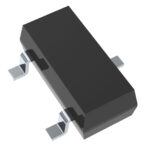 NE68133-A
The activity of extra discounts on wholesale prices is in full swing…
Please fill in your contact information and we will send you the latest wholesale price list.





