ChipApex | Global Electronic Components Supplier
SEARCH
Search Product
Search Post
— IC芯片 | 连接器 | 传感器 | 被动器件 —
Search productSearch post
— IC芯片 | 连接器 | 传感器 | 被动器件 —
Consult the customer manager about the wholesale price.
consultation hotline:86-132-6715-2157
email:[email protected]
Contact the product manager for consultation. One-stop consultation is available.
Do you want a lower wholesale price? Please send us your inquiry and we will reply immediately.
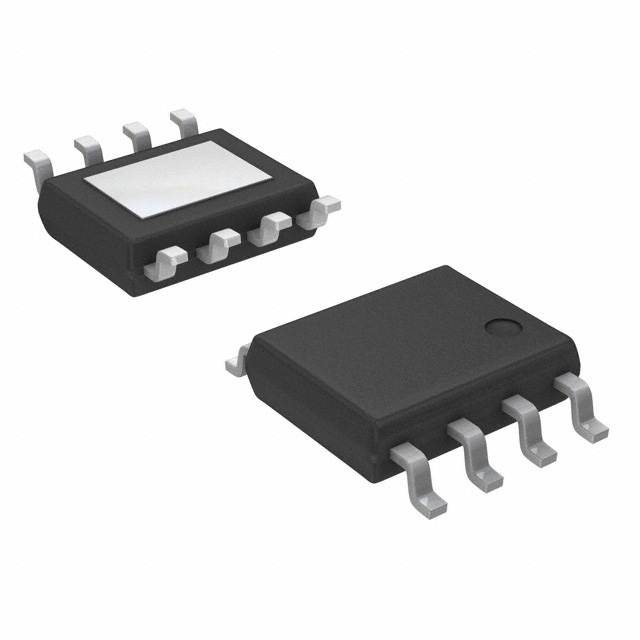
The NPT1004D is a Gallium Nitride High Electron Mobility Transistor (GaN HEMT) designed for DC to 4 GHz operation. It delivers 45 W of continuous wave output power at the P3dB compression point with a small signal gain of 13.5 dB and 55% drain efficiency at 28 V. The device supports linear applications including OFDM and operates within a junction temperature range up to 200°C. Packaged in a thermally enhanced surface-mount SOIC format, it features an exposed paddle for RF and DC grounding.
Verify the specific ordering suffix against the manufacturer's current documentation before procurement. The datasheet lists tube and reel packaging options; confirm the required quantity matches the available configuration. Ensure static discharge precautions are observed during handling due to electrostatic sensitivity. Confirm RoHS compliance status aligns with project requirements.
Select this component for designs requiring high linearity and power density in the sub-4 GHz spectrum. Evaluate thermal management strategies carefully, as the exposed pad requires a low thermal resistance path to ground. Verify impedance matching networks against the provided optimum impedance characteristics for both CW and OFDM performance targets.
This part belongs to MACOM's portfolio of GaN power transistors engineered for broadband RF applications. It utilizes silicon-based GaN technology to provide robust performance in wireless infrastructure and radar systems. The device integrates high electron mobility transistor architecture to support efficient power amplification in compact surface-mount packages.
No public confirmed substitute part numbers are documented in the source material.
Operating at nominal conditions with a junction temperature less than or equal to 200°C ensures an MTTF greater than 1 x 10^6 hours.
The exposed pad centered on the package bottom must be connected to RF and DC ground and must provide a low thermal resistance heat path.
No, MACOM products are not intended for use in medical, lifesaving, or life-sustaining applications.
 NPT1004D
The activity of extra discounts on wholesale prices is in full swing…
Please fill in your contact information and we will send you the latest wholesale price list.