 ChipApex | Global Electronic Components Supplier
SEARCH
Search Product
Search Post
— IC芯片 | 连接器 | 传感器 | 被动器件 —
Search productSearch post
— IC芯片 | 连接器 | 传感器 | 被动器件 —
Consult the customer manager about the wholesale price.
consultation hotline:86-132-6715-2157
email:[email protected]
Contact the product manager for consultation. One-stop consultation is available.
Do you want a lower wholesale price? Please send us your inquiry and we will reply immediately.
The NTSB20U100CT-1G is a dual Schottky power rectifier manufactured by onsemi, featuring a common cathode configuration. It utilizes trench-based silicon technology to achieve very low forward voltage characteristics. The device is housed in an I2PAK (TO-262) through-hole package with long leads. Key electrical specifications include a maximum repetitive reverse voltage of 100 V and a continuous forward current rating of 20 A per diode. The typical forward voltage is approximately 650 mV at 10 A, with a maximum reverse leakage current of 17 uA at 70 V. It supports a forward surge current of 100 A and operates within a junction temperature range of -40 C to +150 C.
Verify component authenticity through authorized onsemi distributors or certified partners. Confirm RoHS compliance status via official documentation prior to integration. Ensure storage conditions adhere to moisture sensitivity levels specified in the datasheet. Validate pinout compatibility with existing PCB footprints during procurement planning. Request batch-specific test reports if required for quality assurance protocols.
Select this component when low forward voltage drop is critical for system efficiency. Consider the 20 A current rating and 100 V blocking capability for suitable voltage and current margins. Evaluate thermal management requirements due to the through-hole package limitations compared to surface mount alternatives. Verify that the I2PAK footprint matches the target board layout constraints.
This part belongs to onsemi's NTSB series of Schottky power rectifiers. It shares architectural similarities with other trench-based Schottky devices but differs in specific current and voltage ratings. The I2PAK package provides mechanical robustness suitable for industrial environments. It serves as a discrete solution for medium-power rectification tasks where traditional PN junctions would incur higher losses.
Direct substitutes may include parts from the same family with adjusted ratings. Verify equivalent forward voltage and reverse leakage characteristics. Check package dimension compatibility for direct replacement without PCB modification. Ensure thermal resistance values align with existing cooling solutions.
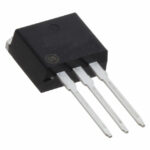 NTSB20U100CT-1G
The activity of extra discounts on wholesale prices is in full swing…
Please fill in your contact information and we will send you the latest wholesale price list.





