ChipApex | Global Electronic Components Supplier
SEARCH
Search Product
Search Post
— IC芯片 | 连接器 | 传感器 | 被动器件 —
Search productSearch post
— IC芯片 | 连接器 | 传感器 | 被动器件 —
Consult the customer manager about the wholesale price.
consultation hotline:86-132-6715-2157
email:[email protected]
Contact the product manager for consultation. One-stop consultation is available.
Do you want a lower wholesale price? Please send us your inquiry and we will reply immediately.
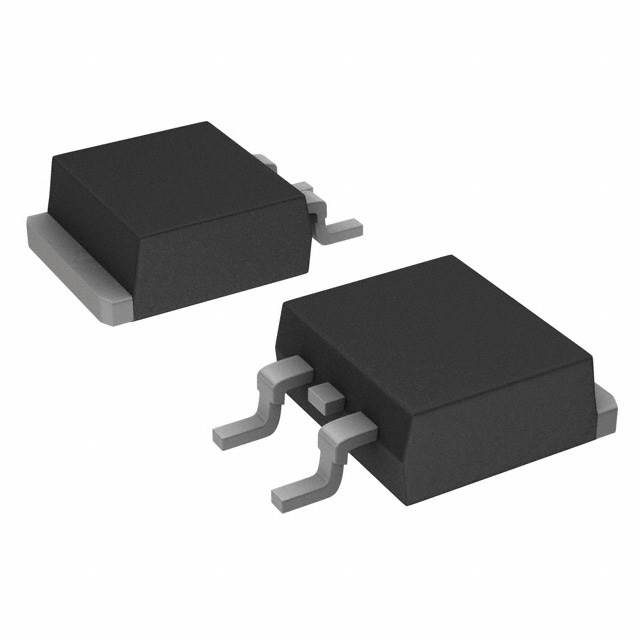
The NTSB20U100CTG is a dual Schottky power rectifier manufactured by onsemi, designed for surface-mount applications. It features a common cathode configuration within a TO-263-3 (D2PAK) package. The device utilizes silicon technology and supports through-hole equivalent performance in a compact form factor. Key electrical parameters include a maximum repetitive reverse voltage of 100 V and an average forward current rating of 20 A. The typical forward voltage is 658 mV at rated conditions, with a maximum reverse leakage current of 800 uA. The component operates reliably across a junction temperature range of -40°C to +150°C and withstands a forward surge current of 100 A.
Verify the specific ordering suffix and package variant against the official onsemi datasheet to ensure compatibility with design requirements. Confirm RoHS compliance status and material composition declarations prior to integration. Check for end-of-life notifications or production discontinuation notices from the manufacturer to assess long-term availability risks for the project lifecycle.
Select this component when a surface-mount solution is required for dual Schottky rectification tasks. The TO-263-3 package offers thermal performance comparable to larger through-hole devices while saving board space. Ensure the application voltage does not exceed the 100 V rating and that the thermal management strategy supports the specified junction temperature limits under peak load conditions.
This part belongs to the NTSB series of Schottky power rectifiers from onsemi. It is distinct from the NTSV and NTST series variants which may differ in package type or specific electrical characteristics. The NTSB series is specifically engineered for surface-mount technology (SMT) assembly processes, providing robust performance in industrial and consumer power electronics.
The NTSV20U100CTG is a related dual Schottky rectifier but utilizes a TO-220-3 through-hole package rather than the surface-mount D2PCAK format. Direct substitution requires PCB layout modification. Verify pinout compatibility and thermal dissipation requirements before considering alternative packages within the same electrical specification family.
 NTSB20U100CTG
The activity of extra discounts on wholesale prices is in full swing…
Please fill in your contact information and we will send you the latest wholesale price list.