 ChipApex | Global Electronic Components Supplier
SEARCH
Search Product
Search Post
— IC芯片 | 连接器 | 传感器 | 被动器件 —
Search productSearch post
— IC芯片 | 连接器 | 传感器 | 被动器件 —
Consult the customer manager about the wholesale price.
consultation hotline:86-132-6715-2157
email:[email protected]
Contact the product manager for consultation. One-stop consultation is available.
Do you want a lower wholesale price? Please send us your inquiry and we will reply immediately.
The PBR951,215 is a silicon NPN transistor in a surface-mount SOT23 package designed for UHF wideband applications. It features a transition frequency of 8 GHz and a maximum unilateral power gain of 14 dB at 1 GHz. The device operates with a collector-base voltage up to 20 V and a total power dissipation of 365 mW at a soldering point temperature of 60 °C. Key electrical characteristics include a noise figure as low as 1.3 dB at 1 GHz and a DC current gain ranging from 50 to 200. Gold metallization ensures high reliability for RF front-end integration.
Verify the component matches the original Philips Semiconductors specification dated August 10, 1998. Confirm the SOT23 package outline and pin configuration (Base, Emitter, Collector) align with design requirements. Ensure thermal management supports the specified junction-to-soldering point resistance of 315 K/W under operating conditions.
Select this transistor for UHF wideband applications requiring low noise and high gain in a small form factor. Consider the 8 GHz transition frequency for GHz-range operations. Evaluate the 365 mW power dissipation limit against the expected thermal environment, specifically monitoring the soldering point temperature to prevent exceeding absolute maximum ratings.
The PBR951 is a discrete semiconductor component manufactured by Philips Semiconductors, now part of NXP. It belongs to the SC14 category within Discrete Semiconductors. The datasheet supersedes the version from June 9, 1998, providing final product specifications for reliable integration into various RF communication and instrumentation hardware.
No public confirmed substitute part numbers are available in the provided documentation.
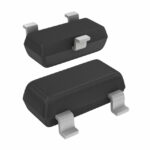 PBR951,215
The activity of extra discounts on wholesale prices is in full swing…
Please fill in your contact information and we will send you the latest wholesale price list.





