ChipApex | Global Electronic Components Supplier
SEARCH
Search Product
Search Post
— IC芯片 | 连接器 | 传感器 | 被动器件 —
Search productSearch post
— IC芯片 | 连接器 | 传感器 | 被动器件 —
Consult the customer manager about the wholesale price.
consultation hotline:86-132-6715-2157
email:[email protected]
Contact the product manager for consultation. One-stop consultation is available.
Do you want a lower wholesale price? Please send us your inquiry and we will reply immediately.
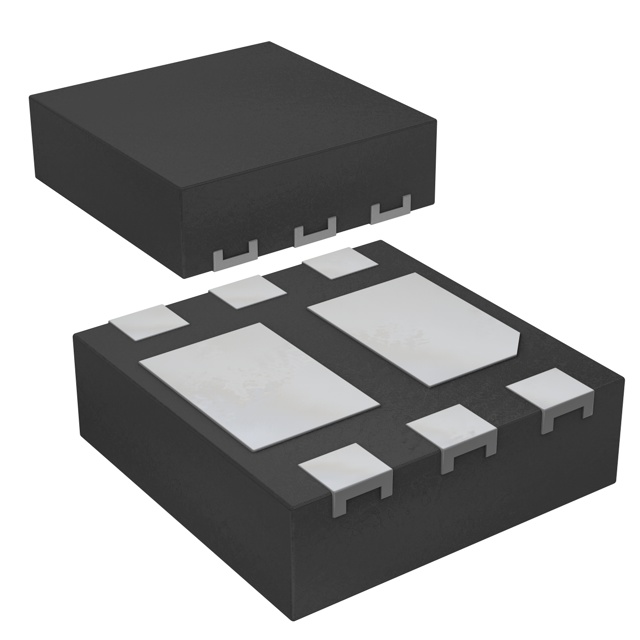
The PBSS5130PAP,115 is a PNP/PNP low VCEsat transistor manufactured by Nexperia. It is housed in a leadless DFN2020-6 (SOT1118) surface-mounted package with six terminals. The device features a collector-emitter voltage of -30 V and a continuous collector current of -1 A per transistor. Peak collector current reaches -2 A for single pulses up to 1 ms. The collector-emitter saturation resistance is typically 250 mΩ at -1 A collector current and -0.1 A base current. DC current gain ranges from 120 to 350 depending on operating conditions. The transition frequency is typically 125 MHz. Total power dissipation varies based on PCB copper thickness and layer count, reaching up to 2 W on a 4-layer board.
Verify the specific ordering suffix against the manufacturer's current catalog to confirm package version and marking codes. Confirm that the non-automotive qualification status aligns with the target application environment. Check the most recent datasheet revision for any updates to thermal characteristics or limiting values before finalizing design specifications.
Select this component when low saturation voltage is critical for minimizing power loss in switching applications. Ensure the PCB layout supports the required thermal dissipation, as power handling depends heavily on copper area and layer configuration. Verify that the -30 V rating meets the maximum circuit voltage requirements under all transient conditions.
This part belongs to the BISS (Breakthrough In Small Signal) transistor family designed for medium power applications. It serves as the PNP/PNP complement within the series, distinct from NPN variants like the PBSS4130PANP. The device utilizes a leadless plastic package optimized for thermal performance and space-constrained designs.
The PBSS4130PANP offers an NPN/PNP complementary configuration. The PBSS4130PAN provides an NPN/NPN configuration. For automotive-grade requirements, consult the Nexperia website for qualified alternatives such as the PBSS5130QA, as this specific part number lacks automotive certification.
 PBSS5130PAP,115
The activity of extra discounts on wholesale prices is in full swing…
Please fill in your contact information and we will send you the latest wholesale price list.