ChipApex | Global Electronic Components Supplier

SEARCH
Search Product
Search Post
— IC芯片 | 连接器 | 传感器 | 被动器件 —
Search productSearch post
— IC芯片 | 连接器 | 传感器 | 被动器件 —
Consult the customer manager about the wholesale price.
consultation hotline:86-132-6715-2157
email:[email protected]
Contact the product manager for consultation. One-stop consultation is available.
Do you want a lower wholesale price? Please send us your inquiry and we will reply immediately.
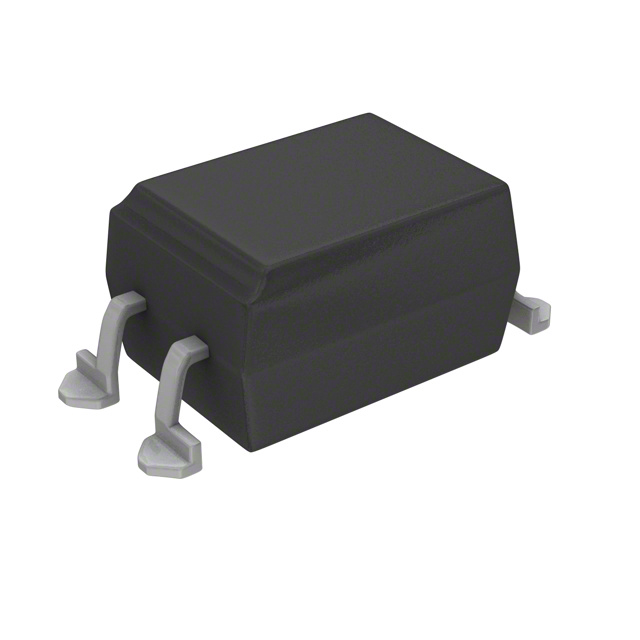
The PS2561AL2-1-V-H-A is a single-channel transistor output optocoupler manufactured by CEL. It integrates a GaAs infrared emitting diode and an NPN silicon phototransistor within a surface-mount plastic package featuring L2 wide lead bending (Gull-wing) configuration. The device provides high isolation voltage of 5000 Vrms between input and output circuits. Key electrical parameters include a maximum collector-emitter voltage of 70 V, a maximum collector current of 30 mA, and a typical current transfer ratio of 400%. It operates within a temperature range of -55°C to +100°C with a power dissipation rating of 150 mW.
Verify component authenticity through authorized distribution channels due to discontinued status. Confirm RoHS compliance documentation matches specific manufacturing lot requirements. Check for alternative sourcing options as availability may be limited in secondary markets. Ensure storage conditions adhere to moisture sensitivity levels specified in the datasheet prior to reflow soldering processes.
Select this component when surface mount technology is required for single-channel isolation applications. The L2 lead form factor facilitates standard SMT placement equipment compatibility. Consider the 400% current transfer ratio for efficient drive requirements. Verify that the 70V collector-emitter voltage rating meets circuit switching needs. Evaluate thermal management capabilities given the 150mW power dissipation limit in enclosed environments.
This part belongs to the PS2561A series of high isolation voltage optocouplers originally developed by NEC Electronics and later produced by CEL and Renesas. The series includes DIP and various surface mount variants with different lead configurations. The PS2561AL2-1 specifically denotes the L2 wide lead bending type optimized for surface mounting. This family is designed for cost-effective isolation solutions in industrial and consumer electronics.
Direct substitutes include PS2561AL2-1-E3-A-L and PS2561AL2-1Y-A from compatible manufacturers. Verify pinout compatibility and electrical parameter equivalence before substitution. Check for equivalent safety certifications such as UL or CSA approvals if required by end-use regulations.
 PS2561AL2-1-V-H-A

The activity of extra discounts on wholesale prices is in full swing…
Please fill in your contact information and we will send you the latest wholesale price list.