ChipApex | Global Electronic Components Supplier

SEARCH
Search Product
Search Post
— IC芯片 | 连接器 | 传感器 | 被动器件 —
Search productSearch post
— IC芯片 | 连接器 | 传感器 | 被动器件 —
Consult the customer manager about the wholesale price.
consultation hotline:86-132-6715-2157
email:[email protected]
Contact the product manager for consultation. One-stop consultation is available.
Do you want a lower wholesale price? Please send us your inquiry and we will reply immediately.
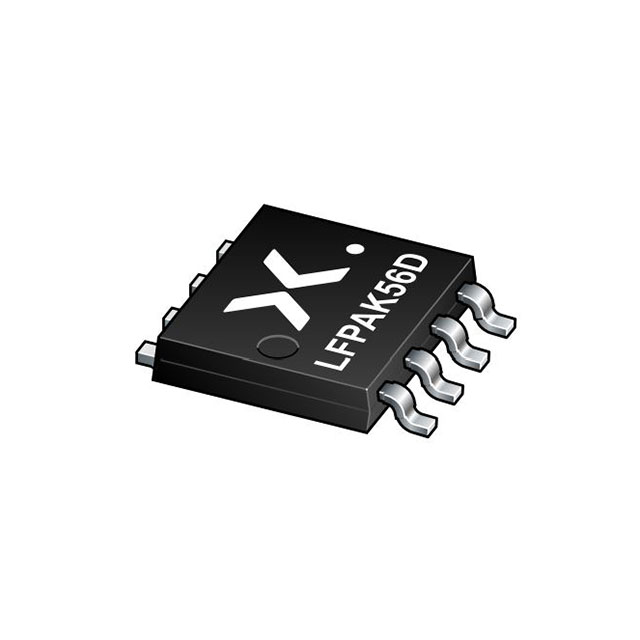
The Nexperia PSMN9R3-60HSX is a dual standard level N-channel MOSFET utilizing TrenchMOS technology within an LFPAK56D (SOT1205) package. It features a drain-source voltage of 60 V and a continuous drain current of 40 A at 25 °C mounting base temperature. The typical on-state resistance is 9.3 mΩ at 25 °C, rising to 20.8 mΩ at 175 °C. Total power dissipation reaches 68 W under specified conditions. The device supports junction temperatures from -55 °C to 175 °C and includes repetitive avalanche rating capabilities.
Verify the specific suffix '118' or equivalent against the datasheet part number PSMN9R3-60HS to ensure correct packaging and reel specifications. Confirm that the component meets the required thermal management standards for the intended mounting base temperature, as continuous current is limited by the package. Ensure design safeguards are in place to prevent exceeding absolute maximum ratings.
Select this component for applications requiring two independent N-channel switches in a compact surface-mount footprint. The low on-state resistance and high current capability make it suitable for efficient power conversion. Consider the thermal resistance characteristics when designing heat dissipation paths, as performance is dependent on the mounting base temperature.
This device belongs to Nexperia's TrenchMOS portfolio, designed for industrial and communications applications. The LFPAK56D package provides robust mechanical stability and thermal performance through its exposed pad design. The dual configuration allows for space-saving designs in bridge circuits or half-bridge topologies without compromising electrical isolation between channels.
Direct substitutes must match the dual N-channel topology, 60 V rating, and LFPAK56D package. Verify pinout compatibility and thermal resistance values before implementation.
The maximum non-repetitive drain-source avalanche energy is 103 mJ when ID = 40 A, Vsup ≤ 60 V, VGS = 10 V, and initial junction temperature is 25 °C.
The typical on-state resistance increases from 9.3 mΩ at 25 °C to 20.8 mΩ at 175 °C junction temperature under standard test conditions.
No, unless expressly stated otherwise in the data sheet, this product is not suitable for automotive use and is not qualified according to automotive testing requirements.
 PSMN9R3-60HSX

The activity of extra discounts on wholesale prices is in full swing…
Please fill in your contact information and we will send you the latest wholesale price list.