 ChipApex | Global Electronic Components Supplier

SEARCH
Search Product
Search Post
— IC芯片 | 连接器 | 传感器 | 被动器件 —
Search productSearch post
— IC芯片 | 连接器 | 传感器 | 被动器件 —
Consult the customer manager about the wholesale price.
consultation hotline:86-132-6715-2157
email:[email protected]
Contact the product manager for consultation. One-stop consultation is available.
Do you want a lower wholesale price? Please send us your inquiry and we will reply immediately.
The PTN3460BS/F4Y is an embedded DisplayPort to LVDS bridge IC manufactured by NXP USA Inc. It converts DP streams from sources like CPUs or GPUs into LVDS format for display panels. The device supports link rates of 1.62 Gbit/s and 2.7 Gbit/s with 1-lane or 2-lane operation. It handles pixel clock frequencies up to 112 MHz, supporting color depths of 18 bpp and 24 bpp in VESA or JEIDA formats. Powered by a 3.3 V supply (with optional 1.8 V), it operates within a temperature range of 0 °C to 70 °C. The component is housed in a 56-HVQFN package measuring 7 mm x 7 mm.
Verify the specific firmware version associated with the F4Y suffix against project requirements, as versions may not be backwards compatible. Confirm that the HVQFN56 package dimensions and thermal pad connections align with the PCB layout. Ensure the system design accommodates the specified operating temperature range and power supply configurations.
Select this component when interfacing eDP sources with LVDS displays requiring protocol conversion. Consider the F4Y variant specifically if its firmware version matches the required panel support features. Evaluate the need for EDID emulation if the target display lacks an onboard ROM. Verify compatibility with the host's I2C or AUX interface for configuration.
The PTN3460BS/F4Y belongs to the PTN3460 family of bridge ICs designed for commercial and industrial applications. This series facilitates connectivity between embedded DisplayPort sources and LVDS panels. The 'F4Y' suffix denotes a specific firmware version within the PTN3460BS product line, distinguishing it from other variants based on internal configuration tables and supported features.
Public confirmed substitute part numbers are not available in the provided documentation. Consult NXP technical support for form, fit, and function compatible alternatives if necessary.
The device supports EDID ROM emulation, allowing it to mimic EDID behavior for panels lacking an onboard ROM. It can store up to seven different EDID data structures internally.
The LVDS transmitter supports pixel clock frequencies ranging from 25 MHz up to 112 MHz.
Yes, while the default mode is 2-lane operation, the device supports 1-lane DP operation. This can be enabled by connecting only one lane or modifying the DPCD register via the I2C configuration utility.
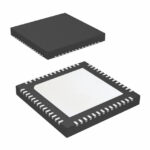 PTN3460BS/F4Y

The activity of extra discounts on wholesale prices is in full swing…
Please fill in your contact information and we will send you the latest wholesale price list.





