ChipApex | Global Electronic Components Supplier
SEARCH
Search Product
Search Post
— IC芯片 | 连接器 | 传感器 | 被动器件 —
Search productSearch post
— IC芯片 | 连接器 | 传感器 | 被动器件 —
Consult the customer manager about the wholesale price.
consultation hotline:86-132-6715-2157
email:[email protected]
Contact the product manager for consultation. One-stop consultation is available.
Do you want a lower wholesale price? Please send us your inquiry and we will reply immediately.
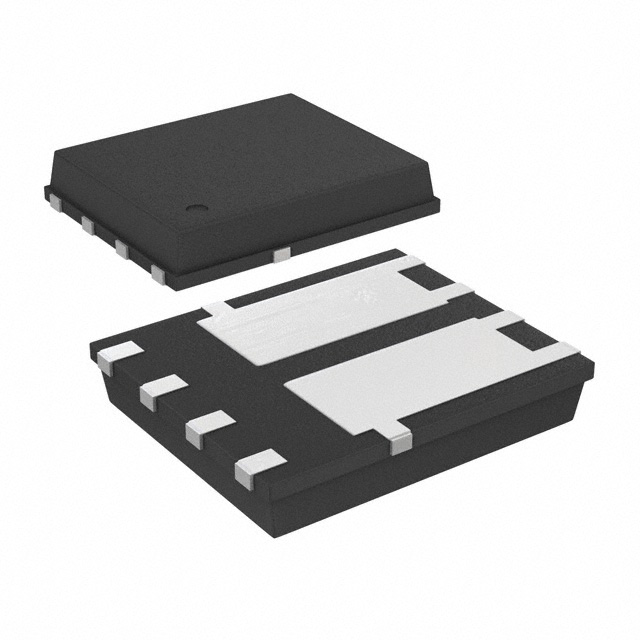
The Vishay Siliconix Si7956DP-T1-GE3 is a dual N-channel MOSFET utilizing TrenchFET technology, housed in a leadless PowerPAK SO-8 package. It features a drain-source voltage (VDS) of 150 V and a continuous drain current (ID) of 4.1 A at 25 °C. The device exhibits a maximum on-resistance (RDS(on)) of 0.105 Ω at VGS = 10 V and 0.115 Ω at VGS = 6 V. Key dynamic parameters include a total gate charge (Qg) of 26 nC and a forward transconductance (gfs) of 10 S. Operating junction temperatures range from -55 °C to +150 °C, with a maximum power dissipation of 3.5 W at 25 °C.
Verify component authenticity by cross-referencing the manufacturer part number against official Vishay documentation. Confirm that the specific suffix corresponds to the required halogen-free and lead-free specifications. Ensure the ordering quantity aligns with standard reel packaging requirements defined by the manufacturer.
Select this component when a dual N-channel topology is required for high-voltage switching applications. The 150 V rating supports primary side operations, while the low RDS(on) minimizes conduction losses. Evaluate thermal management strategies based on the specified junction-to-ambient resistance values for the target PCB layout.
This component belongs to the Vishay Siliconix TrenchFET family, specifically engineered for surface-mount applications. It utilizes the PowerPAK SO-8 package, which offers a smaller footprint than traditional packages while maintaining thermal performance comparable to larger DPAK devices. The dual configuration allows for integrated circuit designs requiring two independent channels.
Direct replacements must match the 150 V rating, dual channel configuration, and PowerPAK SO-8 footprint. Verify that alternative components meet or exceed the 0.105 Ω RDS(on) specification at VGS = 10 V and maintain compatible gate charge characteristics for similar switching speeds.
The absolute maximum gate-source voltage (VGS) rating is ± 20 V.
The PowerPAK SO-8 package provides significantly lower junction-to-case thermal resistance (typical 2.2 °C/W) compared to standard SO-8 packages, allowing it to handle higher power densities within the same footprint.
Yes, the datasheet specifies a single avalanche energy (EAS) rating of 11 mJ with an inductance of 0.1 mH.
 SI7956DP-T1-GE3
The activity of extra discounts on wholesale prices is in full swing…
Please fill in your contact information and we will send you the latest wholesale price list.