ChipApex | Global Electronic Components Supplier
SEARCH
Search Product
Search Post
— IC芯片 | 连接器 | 传感器 | 被动器件 —
Search productSearch post
— IC芯片 | 连接器 | 传感器 | 被动器件 —
Consult the customer manager about the wholesale price.
consultation hotline:86-132-6715-2157
email:[email protected]
Contact the product manager for consultation. One-stop consultation is available.
Do you want a lower wholesale price? Please send us your inquiry and we will reply immediately.
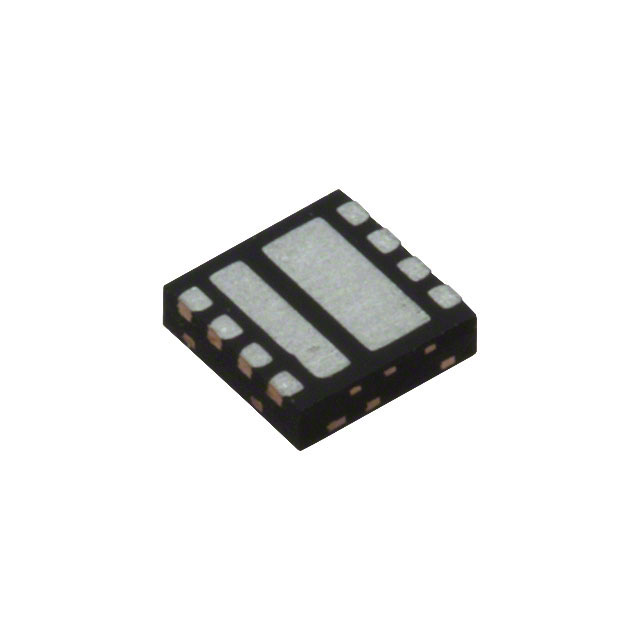
The SIZ340DT-T1-GE3 is a dual N-channel enhancement mode MOSFET from Vishay Siliconix, utilizing TrenchFET technology and housed in an 8-pin PowerPAIR 3 x 3 surface-mount package. It features two independent channels with a drain-source voltage rating of 30 V. Channel-1 offers a maximum on-resistance of 9.5 mΩ at VGS = 10 V and a continuous drain current of 30 A (TC = 25 °C). Channel-2 provides a lower on-resistance of 5.1 mΩ at VGS = 10 V and supports up to 40 A under the same conditions. The device operates within a junction temperature range of -55 °C to +150 °C.
Verify component authenticity by checking the manufacturer's marking code against official datasheet specifications. Confirm compliance with lead-free and halogen-free material requirements as stated in the ordering information. Ensure that the received package matches the PowerPAIR 3 x 3 outline dimensions and pad pattern recommendations to guarantee proper thermal and electrical connectivity during assembly.
Select this component when designing synchronous rectification stages requiring matched or complementary channel characteristics within a single compact footprint. Consider the specific on-resistance and current capabilities of each channel independently, as they differ significantly. Evaluate thermal management strategies based on the provided junction-to-ambient and junction-to-case resistance values for the intended operating environment.
This part belongs to the SiZ340DT series of dual N-channel MOSFETs manufactured by Vishay Siliconix. It is specifically engineered for applications demanding efficient power conversion in limited space. The PowerPAIR packaging allows for reduced board area compared to traditional discrete solutions while maintaining robust thermal dissipation capabilities through exposed copper terminals.
Direct replacements must match the 30 V drain-source voltage rating and utilize the 8-pin PowerPAIR 3 x 3 package. Verify that alternative components offer comparable on-resistance values and gate charge characteristics to maintain switching performance. Ensure any substitute also meets the required thermal resistance and operating temperature range specifications.
 SIZ340DT-T1-GE3
The activity of extra discounts on wholesale prices is in full swing…
Please fill in your contact information and we will send you the latest wholesale price list.