 ChipApex | Global Electronic Components Supplier
SEARCH
Search Product
Search Post
— IC芯片 | 连接器 | 传感器 | 被动器件 —
Search productSearch post
— IC芯片 | 连接器 | 传感器 | 被动器件 —
Consult the customer manager about the wholesale price.
consultation hotline:86-132-6715-2157
email:[email protected]
Contact the product manager for consultation. One-stop consultation is available.
Do you want a lower wholesale price? Please send us your inquiry and we will reply immediately.
The SSM2220P is a dual, low noise, matched PNP transistor optimized for audio applications. It features an ultralow input voltage noise of typically 0.7 nV/√Hz across the 20 Hz to 20 kHz audio bandwidth. The device offers a high gain bandwidth of 190 MHz typical and a current gain of 165 at IC = 1 mA. Tight gain matching is specified with a maximum ΔhFE of 3% (sample tested) or 6% guaranteed, while offset voltage is limited to 200 μV maximum. Bulk resistance is typically 0.3 Ω, ensuring accurate logarithmic conformance. Internal protection diodes clamp reverse base-emitter potentials to prevent breakdown degradation. The component operates over an extended industrial temperature range of −40°C to +85°C.
Verify the specific package option when ordering, as the SSM2220P designation corresponds to the 8-lead plastic dual in-line (PDIP) package. Other variants such as SSM2220S utilize the standard small outline package. Confirm RoHS compliance status if required by your manufacturing specifications, noting that suffixes like Z indicate compliant parts. Ensure the operating environment remains within the specified -40°C to +85°C range for guaranteed electrical characteristics.
Select the SSM2220P for circuits requiring minimal voltage noise contribution in the audio frequency range. The tight gain matching helps minimize offset errors in differential configurations. Consider the thermal resistance values provided for the PDIP package when designing heat dissipation strategies. Verify that the collector current requirements align with the optimal noise figure curves found in the typical performance characteristics section of the datasheet.
This component belongs to Analog Devices' lineup of matched transistor pairs designed for high-fidelity analog signal processing. It serves as a discrete alternative to integrated operational amplifiers in ultra-low noise front-end stages. The dual configuration allows for precise matching of parameters critical to balanced audio paths and precision current mirror applications where mismatch-induced errors must be minimized.
Public confirmed substitute part numbers are not explicitly listed in the provided documentation. Designers should evaluate other dual matched PNP transitors based on similar noise density, gain bandwidth, and offset voltage specifications. Verify pin compatibility and thermal characteristics before substituting.
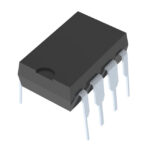 SSM2220P
The activity of extra discounts on wholesale prices is in full swing…
Please fill in your contact information and we will send you the latest wholesale price list.






