ChipApex | Global Electronic Components Supplier
SEARCH
Search Product
Search Post
— IC芯片 | 连接器 | 传感器 | 被动器件 —
Search productSearch post
— IC芯片 | 连接器 | 传感器 | 被动器件 —
Consult the customer manager about the wholesale price.
consultation hotline:86-132-6715-2157
email:[email protected]
Contact the product manager for consultation. One-stop consultation is available.
Do you want a lower wholesale price? Please send us your inquiry and we will reply immediately.
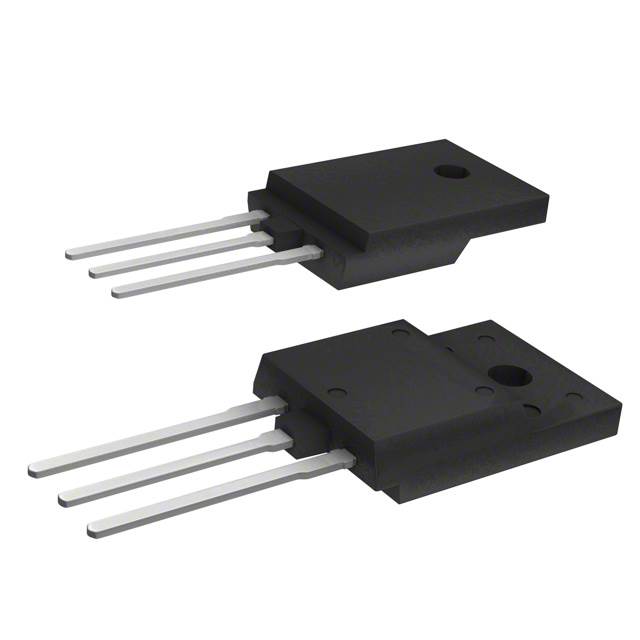
The STGFW30V60F is a trench gate field-stop IGBT from the V series, manufactured by STMicroelectronics. It features an N-channel configuration with a maximum collector-emitter voltage of 600 V and a continuous collector current of 30 A. The device utilizes a proprietary trench gate structure to optimize the balance between conduction and switching losses, supporting high-frequency converter efficiency. Key electrical parameters include a typical saturation voltage of 1.85 V at 30 A, a maximum junction temperature of 175 °C, and a maximum power dissipation of 260 W. It is housed in a TO-247 package for through-hole mounting.
Verify the exact part number against official STMicroelectronics documentation, as suffixes may indicate specific tape-and-reel or tube packaging variations that do not alter electrical function. Confirm RoHS compliance status and ensure the supplier provides valid traceability records. Cross-reference datasheet revisions to confirm parameter consistency before finalizing procurement orders.
Select this component when designing systems requiring high switching frequencies and low thermal resistance in a through-hole package. The positive temperature coefficient of the saturation voltage facilitates parallel operation for higher current capacity without complex balancing circuits. Ensure the application's thermal management strategy supports the 175 °C maximum junction temperature rating for optimal reliability.
This device belongs to the ST V series IGBT family, which emphasizes an optimum compromise between conduction and switching losses. The series is engineered for very high frequency applications, leveraging tight parameter distribution and advanced trench gate field-stop structures to maximize overall system efficiency compared to standard planar technologies.
The STGB30V60DF is a confirmed public substitute within the same V series, offering identical 600 V/30 A ratings and trench gate field-stop technology. Verify pinout compatibility and thermal interface requirements when substituting, as both devices share similar mechanical and electrical characteristics for direct replacement in existing designs.
 STGFW30V60F
The activity of extra discounts on wholesale prices is in full swing…
Please fill in your contact information and we will send you the latest wholesale price list.