ChipApex | Global Electronic Components Supplier
SEARCH
Search Product
Search Post
— IC芯片 | 连接器 | 传感器 | 被动器件 —
Search productSearch post
— IC芯片 | 连接器 | 传感器 | 被动器件 —
Consult the customer manager about the wholesale price.
consultation hotline:86-132-6715-2157
email:[email protected]
Contact the product manager for consultation. One-stop consultation is available.
Do you want a lower wholesale price? Please send us your inquiry and we will reply immediately.
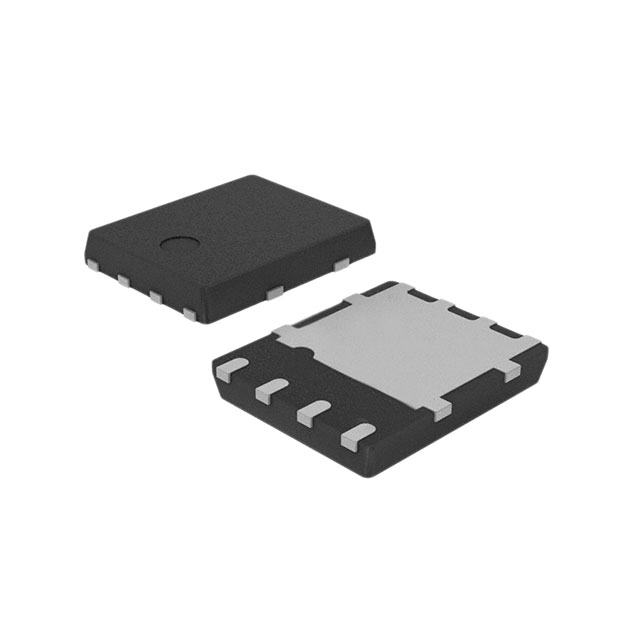
The STL66DN3LLH5 is an automotive-grade dual N-channel Power MOSFET developed using STMicroelectronics’ STripFET™ H5 technology. It features a 30 V drain-source voltage (Vdss) and a typical on-state resistance of 5.9 mOhm, with a maximum of 6.5 mOhm at 10 A and 10 V. The device supports a continuous drain current of 78.5 A at 25°C and dissipates up to 72 W of power. Key electrical parameters include a gate charge of 12 nC at 4.5 V and an input capacitance of 1500 pF at 25 V. It operates within a junction temperature range of -55°C to 175°C and is housed in a PowerFLAT 5x6 double island package.
Verify the specific ordering suffix against the manufacturer's official datasheet to ensure correct packaging configuration. Confirm that the component meets the required AEC-Q101 qualification standards for your specific automotive application environment. Cross-reference the PowerFLAT 5x6 footprint dimensions during PCB layout finalization to prevent assembly errors.
Select this component when a dual N-channel configuration is required within a compact PowerFLAT 5x6 footprint. The STripFET H5 technology offers superior performance compared to previous generations, particularly regarding the balance between on-resistance and gate charge. Ensure the thermal management design accommodates the 72 W power dissipation rating under expected operating conditions.
This part belongs to the STL66 series of low-voltage Power MOSFETs from STMicroelectronics. It utilizes the advanced STripFET H5 technology platform, which is designed to minimize conduction losses while maintaining high switching efficiency. The device is specifically engineered for automotive and industrial markets requiring high current density and reliability.
Direct substitutes include other automotive-grade dual N-channel 30 V MOSFETs in similar packages, such as the STL40DN3LLH5 or STL56N3LLH5, provided their current ratings and on-resistance values meet the circuit requirements. Verify pin compatibility and thermal characteristics before substitution.
 STL66DN3LLH5
The activity of extra discounts on wholesale prices is in full swing…
Please fill in your contact information and we will send you the latest wholesale price list.