 ChipApex | Global Electronic Components Supplier
SEARCH
Search Product
Search Post
— IC芯片 | 连接器 | 传感器 | 被动器件 —
Search productSearch post
— IC芯片 | 连接器 | 传感器 | 被动器件 —
Consult the customer manager about the wholesale price.
consultation hotline:86-132-6715-2157
email:[email protected]
Contact the product manager for consultation. One-stop consultation is available.
Do you want a lower wholesale price? Please send us your inquiry and we will reply immediately.
The TLC69610QPWPRQ1 is an automotive-grade LED driver IC designed for mini-LED matrix local dimming backlight applications. It functions as an 8-scan MOSFET controller featuring 16 output channels within a 28-pin HTSSOP package. The device operates on a PWM topology with a maximum output current of 60 mA per channel and supports input voltages ranging from 3 V to 5.5 V. It delivers up to 20 V output voltage and utilizes a 20 MHz operating frequency. The component is qualified for extended temperature ranges spanning from -40°C to +125°C, ensuring reliability in automotive environments.
Verify the complete part number including suffixes such as PWPRQ1 to ensure correct packaging and automotive grade specifications. Confirm that the procurement source provides official Texas Instruments documentation or authorized distribution channels. Check for moisture sensitivity labeling and storage conditions prior to assembly. Ensure compatibility with existing PCB footprints and thermal management requirements for the HTSSOP-28 package.
Select this component when designing automotive displays requiring precise local dimming control via an 8-scan architecture. It is suitable for applications needing 16 independent output channels with 60 mA drive capability. Consider the 20 V output limit and 3 V to 5.5 V input range when defining power supply rails. This driver is appropriate for mini-LED matrices rather than standard high-power LED arrays.
This part belongs to the TLC6966x-Q1 series of automotive LED drivers from Texas Instruments. It shares the HTSSOP-28 form factor and core interface protocols with siblings like the TLC69600 and TLC69614. The primary distinction lies in its specific 8-scan configuration optimized for particular mini-LED matrix densities and scan rates required by modern automotive display standards.
Direct substitutes include other members of the TLC6966x-Q1 family such as the TLC69600QPWPRQ1 or TLC69614QPWPRQ1, provided the scan configuration matches the design requirements. Verify pin-to-pin compatibility and electrical parameter alignment before swapping components.
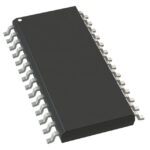 TLC69610QPWPRQ1
The activity of extra discounts on wholesale prices is in full swing…
Please fill in your contact information and we will send you the latest wholesale price list.





