 ChipApex | Global Electronic Components Supplier
SEARCH
Search Product
Search Post
— IC芯片 | 连接器 | 传感器 | 被动器件 —
Search productSearch post
— IC芯片 | 连接器 | 传感器 | 被动器件 —
Consult the customer manager about the wholesale price.
consultation hotline:86-132-6715-2157
email:[email protected]
Contact the product manager for consultation. One-stop consultation is available.
Do you want a lower wholesale price? Please send us your inquiry and we will reply immediately.
The TPS259830LNRGER is a single-channel integrated hot-swap controller manufactured by Texas Instruments. It operates within an input voltage range of 2.7 V to 26 V and features an internal switch with a typical on-resistance of 2.7 mΩ, supporting a maximum output current of 18 A. The device is housed in a 24-VQFN (4x4 mm) package with exposed pad for surface mount installation. It includes programmable current limiting, overvoltage protection, and automatic retry functionality. The component functions reliably across a junction temperature range of -40°C to 125°C.
Verify the complete part number including suffixes to ensure correct packaging and tape-and-reel specifications. Confirm RoHS compliance status and moisture sensitivity level requirements prior to assembly. Check for recent product change notifications regarding manufacturing site or material updates. Ensure ESD handling procedures are followed due to the sensitive nature of the QFN package. Validate that the supply chain source provides authentic Texas Instruments products.
Select this component when a single-channel solution with high current capacity up to 18 A is required. The wide input voltage range suits applications needing flexibility across different power rails. Consider the small footprint for space-constrained designs. Evaluate the need for automatic retry features versus latching protection based on system reliability requirements. Ensure the thermal management strategy supports the 125°C junction temperature limit.
This device belongs to the TPS25983 family of integrated hot-swap controllers. It shares common architectural features with other members like the TPS25982 series but offers specific current and voltage characteristics tailored for higher power applications. The family is designed for robust power distribution in demanding environments.
Direct pin-to-pin replacements may include other TPS25983 variants with adjusted current ratings. Verify compatibility with existing PCB layout and external component values before substitution.
The typical on-resistance is 2.7 mΩ, ensuring low conduction losses.
Yes, it features configurable automatic retry logic to handle transient faults.
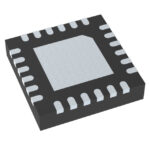 TPS259830LNRGER
The activity of extra discounts on wholesale prices is in full swing…
Please fill in your contact information and we will send you the latest wholesale price list.





