ChipApex | Global Electronic Components Supplier
SEARCH
Search Product
Search Post
— IC芯片 | 连接器 | 传感器 | 被动器件 —
Search productSearch post
— IC芯片 | 连接器 | 传感器 | 被动器件 —
Consult the customer manager about the wholesale price.
consultation hotline:86-132-6715-2157
email:[email protected]
Contact the product manager for consultation. One-stop consultation is available.
Do you want a lower wholesale price? Please send us your inquiry and we will reply immediately.
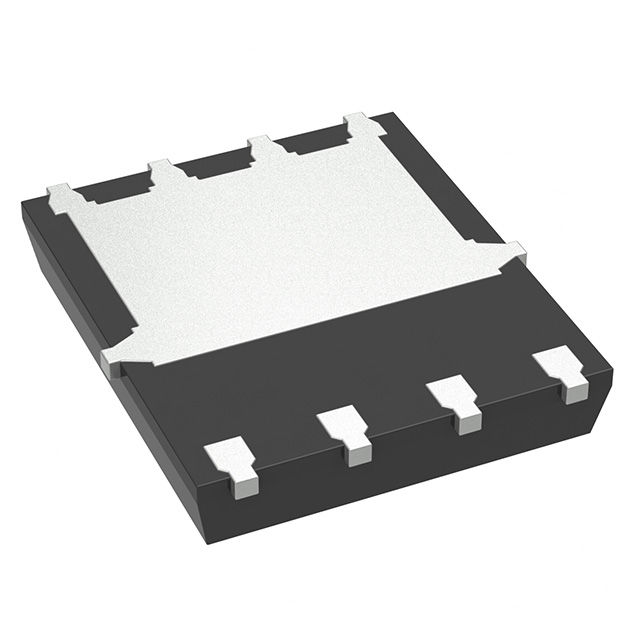
The TQM150NB04DCR RLG is an automotive-grade dual N-channel MOSFET from Taiwan Semiconductor, qualified to AEC-Q101 Rev-D standards. It features a 40V drain-source voltage and supports a continuous drain current of 39A at 25°C case temperature. The device operates up to a junction temperature of 175°C with a maximum on-resistance of 15mΩ at VGS=10V. Packaged in a PDFN56U Dual footprint, it includes integrated body diodes with a reverse recovery time of 14ns.
Verify the specific revision code A1912 against the latest official datasheet before finalizing component selection. Confirm that the PDFN56U Dual package dimensions align with the target PCB layout requirements. Ensure compliance with RoHS directives and IEC 61249-2-21 halogen-free standards as specified by the manufacturer.
Select this component when designing for high-current automotive applications requiring robust avalanche energy handling. The low gate charge of 18nC facilitates efficient driver interface design. Evaluate the thermal resistance parameters relative to the copper pad area to ensure adequate heat dissipation for the intended duty cycle.
This part belongs to the TQM series of automotive dual N-channel MOSFETs manufactured by Taiwan Semiconductor Corporation. The series is engineered specifically for demanding automotive environments, offering enhanced ruggedness compared to standard industrial counterparts through rigorous qualification protocols.
Direct substitutes must match the 40V rating, dual N-channel configuration, and PDFN56U package. Verify that alternative components meet AEC-Q101 requirements if automotive qualification is mandatory for the application.
The maximum single pulse avalanche energy (EAS) is rated at 34 mJ under test conditions of L = 0.3mH, VGS = 10V, VDD = 25V, RG = 50Ω, and IAS = 15A.
At TJ = 125°C, the maximum RDS(on) increases to 25.5mΩ, and at TJ = 175°C, it reaches 31.5mΩ, both measured at VGS = 10V and ID = 9A.
Yes, the device exhibits fast switching characteristics with a turn-on delay of 7ns, rise time of 8ns, turn-off delay of 13ns, and fall time of 4ns.
 TQM150NB04DCR RLG
The activity of extra discounts on wholesale prices is in full swing…
Please fill in your contact information and we will send you the latest wholesale price list.