 ChipApex | Global Electronic Components Supplier
SEARCH
Search Product
Search Post
— IC芯片 | 连接器 | 传感器 | 被动器件 —
Search productSearch post
— IC芯片 | 连接器 | 传感器 | 被动器件 —
Consult the customer manager about the wholesale price.
consultation hotline:86-132-6715-2157
email:[email protected]
Contact the product manager for consultation. One-stop consultation is available.
Do you want a lower wholesale price? Please send us your inquiry and we will reply immediately.
The ULQ2803A is an octal Darlington transistor array manufactured by STMicroelectronics, designed for high-voltage and high-current switching applications. It integrates eight NPN Darlington pairs within a single package, featuring common emitters and integral suppression diodes to handle inductive load flyback currents. The device supports a continuous output current of 500 mA per channel with a peak rating of 600 mA, while withstanding up to 50 V in the off state. It includes a 2.7 kΩ input resistor optimized for direct interfacing with 5 V TTL and CMOS logic families. The component is housed in an 18-lead plastic DIP package with a copper lead frame.
Verify the specific manufacturer source when sourcing components, as multiple vendors produce this standard part number. Confirm that the received units match the STMicroelectronics specification sheet regarding electrical characteristics and physical dimensions. Ensure the package type corresponds to the required 18-lead DIP form factor for your design constraints.
Select the ULQ2803A when the application requires driving loads directly from 5 V logic without external base resistors. This variant is distinct from other ULQ series members due to its specific 2.7 kΩ input resistance tailored for 5 V operation. Consider paralleling outputs if the total load current exceeds the 500 mA continuous limit per channel.
This component belongs to the ULQ2801A through ULQ2804A family of high-voltage Darlington arrays. While electrically similar, each member differs primarily in input resistance values to suit different logic voltage standards. The ULQ2803A specifically targets 5 V systems, whereas variants like the ULQ2802A and ULQ2804A are designed for higher voltage PMOS or CMOS inputs.
The ULN2803A serves as a functional equivalent with identical pinout and electrical specifications. Other compatible substitutes include ECG2018, NTE2018, SK9079, TCG2018, and TM2018. Verify that replacement parts maintain the same 2.7 kΩ input resistance to ensure proper logic interfacing.
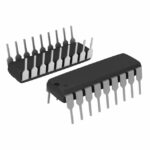 ULQ2803A
The activity of extra discounts on wholesale prices is in full swing…
Please fill in your contact information and we will send you the latest wholesale price list.





