ChipApex | Global Electronic Components Supplier
SEARCH
Search Product
Search Post
— IC芯片 | 连接器 | 传感器 | 被动器件 —
Search productSearch post
— IC芯片 | 连接器 | 传感器 | 被动器件 —
Consult the customer manager about the wholesale price.
consultation hotline:86-132-6715-2157
email:[email protected]
Contact the product manager for consultation. One-stop consultation is available.
Do you want a lower wholesale price? Please send us your inquiry and we will reply immediately.
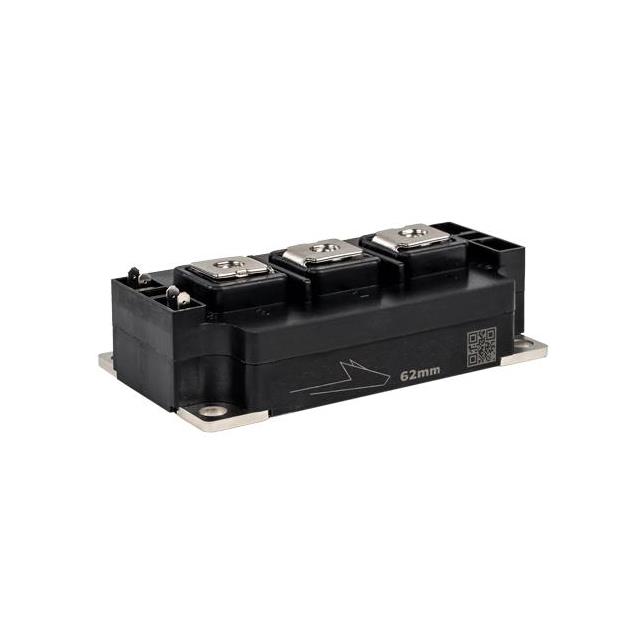
The WAS350M12BM3 is a silicon carbide half-bridge module rated for 1200 V and 350 A. It features an industry-standard 62 mm footprint with a copper baseplate and aluminum nitride insulator. Key electrical parameters include a maximum drain-source voltage of 1200 V, a continuous drain current of 424 A at 25 °C case temperature, and a typical on-state resistance of 5.2 mΩ at 150 °C. The module supports a recommended gate-source voltage of -4 V to +15 V and operates within a junction temperature range of -40 °C to 175 °C.
Verify the specific ordering suffix when purchasing. The WAS350M12BM3 designation indicates the module without pre-applied phase change thermal interface material. The WAS350M12BM3T variant includes this material. Confirm the exact part number matches the thermal management requirements of the target design before procurement.
Select the WAS350M12BM3 for applications requiring a 1200 V, 350 A SiC half-bridge in a compact form factor. Ensure the cooling solution maintains the case temperature within limits to support the specified continuous drain current. Verify that the gate drive circuitry provides the recommended -4 V to +15 V swing for optimal switching performance.
This component belongs to the BM3 series of Wolfspeed silicon carbide modules. It utilizes a copper baseplate and aluminum nitride insulator for thermal management. The module is designed for industrial and harsh environment applications, offering high reliability and efficiency compared to traditional silicon devices.
Direct replacements must match the 62 mm footprint, 1200 V rating, and half-bridge configuration. Evaluate thermal resistance and pinout compatibility. Consider the WAS350M12BM3T if pre-applied thermal interface material is required for the assembly process.
The WAS350M12BM3T includes pre-applied phase change thermal interface material, whereas the WAS350M12BM3 does not.
The maximum transient gate-source voltage is +23 V and -10 V.
SiC Schottky diodes do not have reverse recovery energy, but they still contribute capacitive energy during switching transitions.
 WAS350M12BM3
The activity of extra discounts on wholesale prices is in full swing…
Please fill in your contact information and we will send you the latest wholesale price list.