 ChipApex | Global Electronic Components Supplier
SEARCH
Search Product
Search Post
— IC芯片 | 连接器 | 传感器 | 被动器件 —
Search productSearch post
— IC芯片 | 连接器 | 传感器 | 被动器件 —
Consult the customer manager about the wholesale price.
consultation hotline:86-132-6715-2157
email:[email protected]
Contact the product manager for consultation. One-stop consultation is available.
Do you want a lower wholesale price? Please send us your inquiry and we will reply immediately.
The XC18V01VQ44I is a 3.3V in-system programmable configuration PROM from the XC18V00 series, manufactured by AMD/Xilinx. It provides 1 Mbit (1,048,576 bits) of non-volatile storage for FPGA bitstreams. The device operates within a commercial/industrial temperature range of –40°C to +85°C and supports a maximum clock frequency of 33 MHz. It features dual configuration modes: serial (up to 33 MHz) and parallel (up to 264 Mb/s). The component utilizes a low-power advanced CMOS FLASH process with an endurance of 20,000 program/erase cycles and includes IEEE Std 1149.1 JTAG support for programming and boundary-scan testing.
Verify the specific suffix 'VQ44' corresponds to the 44-pin VQFP package and 'I' indicates the industrial temperature grade (-40°C to +85°C). Confirm that the source documentation explicitly links this part number to the XC18V01 capacity variant. Ensure compatibility with the target FPGA's voltage requirements, as the device supports 3.3V or 2.5V output capabilities.
Select this component when a 1 Mbit configuration memory is required for compatible Xilinx FPGAs. The VQ44 package is suitable for surface-mount applications requiring a compact footprint. Consider the industrial temperature rating if the operating environment exceeds commercial limits. Verify that the target FPGA supports the desired configuration mode, such as Master Serial or Slave Parallel, which dictates the interface complexity.
The XC18V01VQ44I belongs to the XC18V00 series of in-system programmable configuration PROMs. This family includes devices with capacities ranging from 512 Kbit to 4 Mbit. These PROMs are designed specifically to store and provide configuration data to Xilinx FPGAs, offering a cost-effective method for re-programming and storing bitstreams compared to one-time programmable alternatives.
Compatible substitutes within the same family include XC18V01PC44I (PLCC package) or XC18V01SO20I (SOIC package). For different capacities, XC18V02VQ44I (2 Mbit) or XC18V04VQ44I (4 Mbit) may be used if the application requires more storage, provided the FPGA configuration size allows.
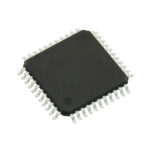 XC18V01VQ44I
The activity of extra discounts on wholesale prices is in full swing…
Please fill in your contact information and we will send you the latest wholesale price list.





