 ChipApex | Global Electronic Components Supplier
SEARCH
Search Product
Search Post
— IC芯片 | 连接器 | 传感器 | 被动器件 —
Search productSearch post
— IC芯片 | 连接器 | 传感器 | 被动器件 —
Consult the customer manager about the wholesale price.
consultation hotline:86-132-6715-2157
email:[email protected]
Contact the product manager for consultation. One-stop consultation is available.
Do you want a lower wholesale price? Please send us your inquiry and we will reply immediately.
The AMD XC18V512PC20C is a high-density, low-voltage CPLD from the Xilinx CoolRunner-II family. It features 512 macrocells and operates at a maximum system clock frequency of 200 MHz. The device utilizes a 1.8V core voltage with I/O voltages ranging from 1.8V to 3.3V. It includes 64 Kbits of non-volatile Flash configuration memory for persistent design storage and supports up to 128 general-purpose I/O pins. The architecture provides flexible pinout options and comprehensive in-system programmability via JTAG or serial programming interfaces.
Verify the specific package suffix and temperature grade against the official datasheet before ordering. Ensure the selected variant matches the required pin count and I/O voltage specifications. Confirm availability of the appropriate programming cable and software tools for initial configuration. Check for any lead time variations associated with specific package types or industrial temperature ranges.
Select this component when non-volatile configuration is required to eliminate external PROMs. Evaluate the total I/O count and voltage requirements to ensure compatibility with the target system interfaces. Consider the thermal dissipation characteristics if operating in enclosed environments. Verify that the available I/O standards meet the signaling requirements of connected peripherals.
This part belongs to the Xilinx CoolRunner-II CPLD family, designed for cost-sensitive, low-power applications requiring moderate logic density. It bridges the gap between simple gate arrays and complex FPGAs, offering deterministic timing and non-volatility. The family is widely used in legacy system upgrades and compact embedded designs where power consumption and board space are critical constraints.
Direct replacements include other CoolRunner-II variants with higher macrocell counts such as the XC2C256 or XC2C512 series, depending on logic resource needs. Cross-family migration to CoolRunner-V or Lattice MachXO series may require significant schematic and code modifications due to architectural differences.
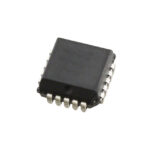 XC18V512PC20C
The activity of extra discounts on wholesale prices is in full swing…
Please fill in your contact information and we will send you the latest wholesale price list.





